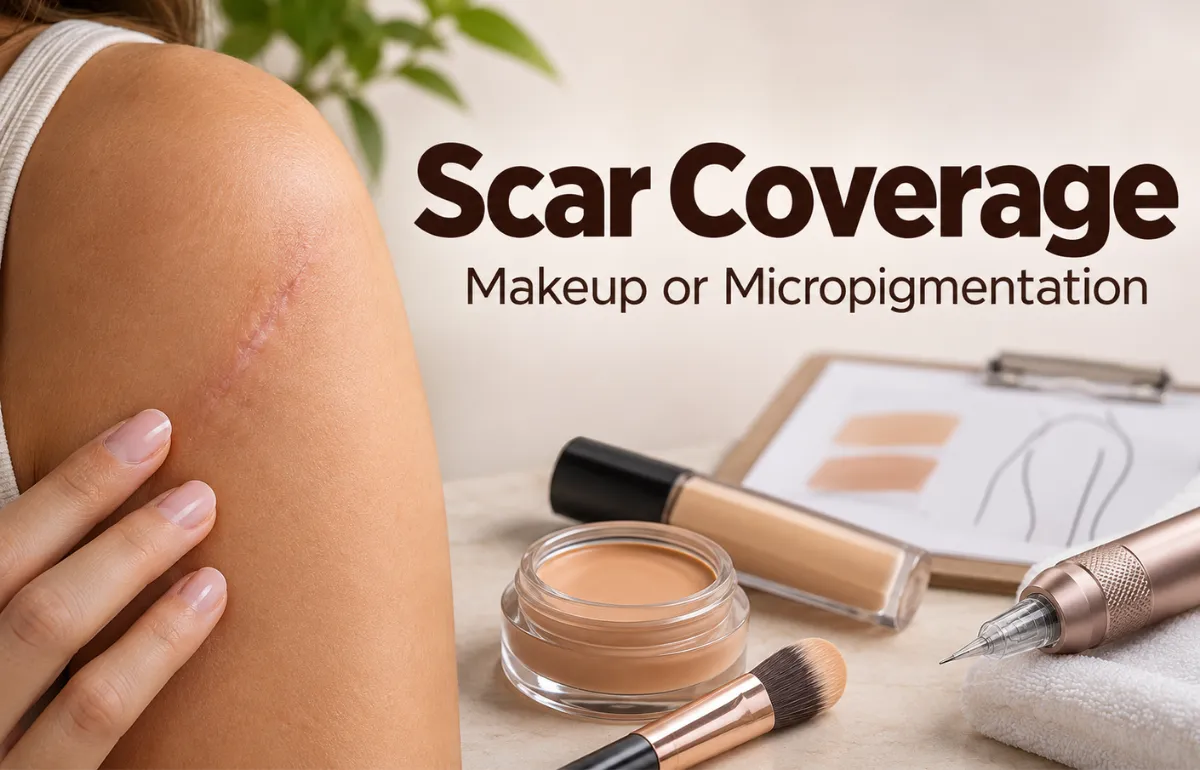
An upcoming wedding, a job involving close contact with customers or a summer wardrobe can make someone reconsider how they manage an old scar. Not every person wants a procedure. Sometimes the practical question is whether a temporary product provides enough coverage, or whether a longer-lasting cosmetic option makes more sense.
For many people, camouflage makeup for scars is a sensible first step. It allows experimentation with shade and coverage without altering the skin. Yet it also involves daily application and removal, which may lead some users to explore specialist pigmentation for stable scars.
A scar visible only at a special event creates different needs from one exposed throughout the working week. Occasional coverage may be straightforward with cosmetics, while frequent application can feel inconvenient. Neither choice is inherently better.
Consider the size and location of the mark. Hands experience frequent washing and friction, while areas covered by clothing may require transfer-resistant products. The best solution should fit ordinary habits rather than depend on an elaborate routine.
What Temporary Products Can Offer
Specialised concealers and colour correctors can reduce contrast between a scar and surrounding skin. Using thin layers and appropriate setting products may improve the appearance without creating a heavy finish. Shade matching should consider undertones as well as lightness.
Coverage varies with lighting, sweat, skin texture and application technique. Testing a product before an important event is wise. A flat scar may conceal more easily than one with raised edges, because makeup cannot remove shadows caused by changes in texture.
When a Longer-Lasting Option Enters the Picture
Micropigmentation places pigment into selected layers of skin to soften a persistent colour difference. It may be considered for certain fully healed, stable scars, especially when repeated makeup application has become frustrating.
It also requires more commitment. Skin must recover after the procedure, shades can change during healing, and future maintenance may be needed. Anyone who wants complete control over the coverage each day may still prefer removable products.
The Role of Scar Texture and Skin History
A mark’s surface matters as much as its colour. Raised, thick, inflamed or unstable scars may not be suitable for cosmetic tattooing. Even well-healed scar tissue can take up pigment differently from surrounding skin, creating variation in the final appearance.
A professional assessment should also review previous reactions, medical history and any tendency to form unusual scars. A dermatologist’s opinion may be appropriate when the scar is changing or when the person is unsure whether the area is fully healed.
Ask to See Healed, Comparable Results
Someone considering scar tattoo camouflage in Dubai should look beyond fresh photographs taken immediately after pigment placement. Healed examples show more about actual colour retention and blending. Results on a different skin tone or scar type may not predict an individual outcome.
Ask who performs the treatment, what hygiene measures are used and how corrections or touch-ups are handled. An ethical provider should discuss the limits of the technique, not simply promise that the scar will disappear.
Compare the Real Cost of Each Approach
Temporary makeup involves repeat purchases and time spent applying it. Micropigmentation has an initial procedure cost and may involve follow-up sessions or eventual refreshes. Neither is automatically more economical; frequency of use makes a difference.
It helps to calculate the practical effort involved as well. Some people value the flexibility of changing their coverage daily, while others place greater value on reducing that routine. Both priorities deserve consideration alongside price.
One useful exercise is to try a temporary product consistently for several weeks. Record how long application takes, how it holds up during a normal day and whether the appearance feels comfortable. That experience can reveal whether a longer-lasting service would solve a genuine inconvenience or simply replace one form of maintenance with another.
Conclusion
Scar coverage is a personal decision shaped by lifestyle, skin characteristics and the amount of change someone wants. Temporary cosmetics offer flexibility, while professional pigmentation may reduce recurring work for suitable healed marks. Information at skincamouflage.ae can introduce the longer-lasting option, but a careful consultation remains essential. Choosing between techniques is easier when convenience, possible limitations and natural-looking results are considered together instead of relying on dramatic before-and-after images.
Dr. Sophia Martinez, MD, FAAD, is a board-certified dermatologist with over 12 years of clinical experience in aesthetic and medical skin care. She specializes in acne treatment, anti-aging, and sensitive skin conditions. At wellhealthorganic1.com, she translates complex dermatology into simple, science-backed daily skincare routines.