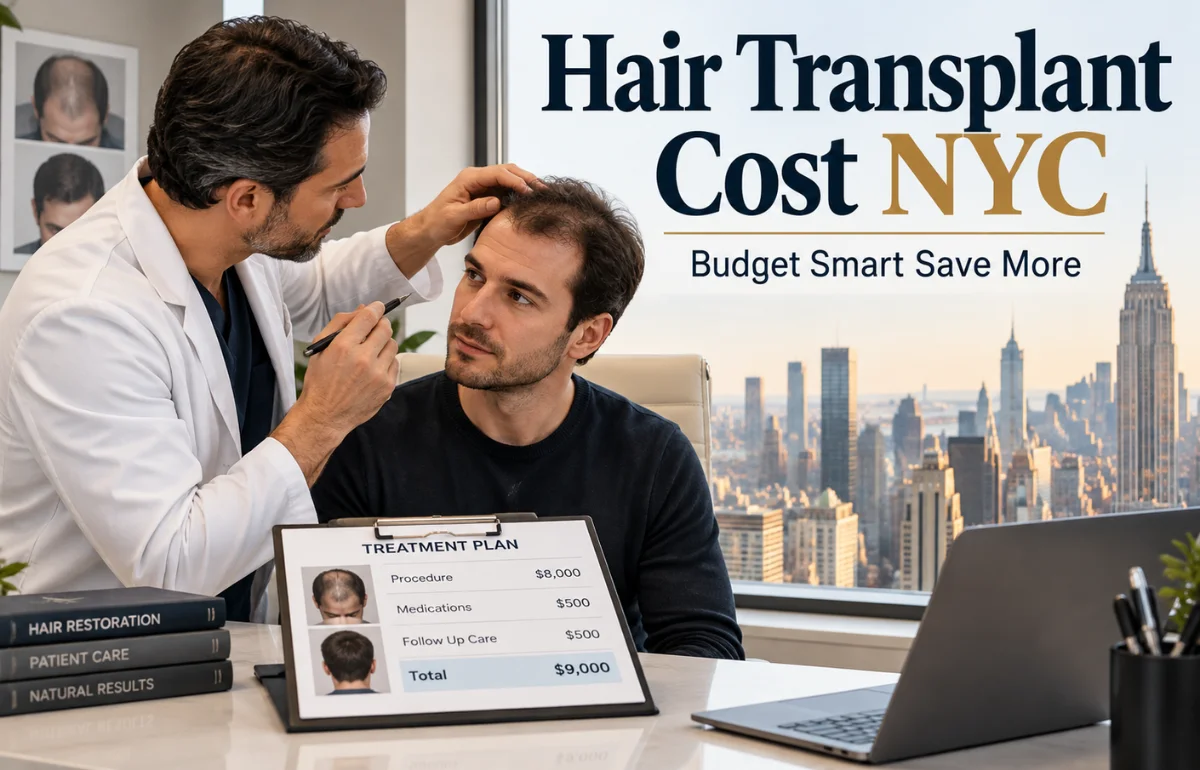
A hair transplant in New York City typically runs from roughly $4,000 for a small session at the low end to well over $20,000 for a large mega-session, and the single biggest driver of that spread is graft count, not the clinic’s zip code. Get an in-person graft-count estimate before you compare any price, separate the surgical fee from PRP or aftercare add-ons, and budget for at least a week away from strenuous work. Peak Hair Restoration’s Manhattan-area team walks new patients through hair transplant cost NYC breakdowns during consultation rather than quoting a number over the phone, which is the habit this guide recommends you look for everywhere you shop.
Budgeting for a hair transplant in 2026 means separating three things that patients routinely lump together: the surgical fee, the technique premium, and the recovery cost of lost work or missed events. This guide breaks the process into steps you can follow before you sign anything, so you know what a fair NYC quote looks like and what should raise questions.
A recent photo of your hairline and crown, taken in natural light, for initial screening
A rough sense of your donor area density (a clinician confirms this, but a mirror check helps you ask informed questions)
Two to three consultation slots booked with different NYC clinics, including Peak Hair Restoration
A calendar view of the next 8-12 months to identify a realistic recovery window
A list of any medications, scalp conditions, or prior transplants to disclose upfront
Step 1: Get a Graft-Count Estimate From a Consultation, Not a Phone Quote
Graft count is what actually sets your price, and no clinic can respond to it accurately without looking at your scalp. A phone or email quote based on a photo alone is a placeholder, not a budget.
During an in-person or video consultation, a clinician examines donor density at the back and sides of the scalp, checks miniaturization patterns at the hairline and crown, and gives you a graft-count range rather than a single number. Peak Hair Restoration’s New York consultations follow this format specifically so patients leave with a realistic estimate instead of a marketing figure.
Expect the estimate to come with a range, such as “1,800 to 2,400 grafts,” not a flat number. Common mistake: patients accept a fixed quote before donor capacity has been assessed, then get hit with a change order once the surgeon opens the donor area on the day of surgery.
Step 2: Compare Per-Graft Pricing Across NYC Clinics
Most NYC clinics price by the graft, and per-graft rates in the city commonly range from around $4 to $8 depending on technique and clinic overhead, according to industry-wide figures tracked by groups like the International Society of Hair Restoration Surgery. A 2,000-graft session at $6 per graft lands near $12,000 before any add-ons.
When you get quotes back, ask each clinic to state their per-graft rate explicitly rather than only a total price. This lets you compare apples to apples instead of comparing packages that bundle different numbers of follow-up visits or PRP sessions. A total-price-only quote with no per-graft breakdown is a sign to ask more questions before booking.
Expected outcome: you should be able to line up two or three quotes side by side and see whether the per-graft rate, not just the headline number, actually differs.
Step 3: Weigh Sapphire FUE Against Other Extraction Techniques
Technique changes both the price and what you’re paying for, so this is the step worth spending the most time on. Sapphire FUE uses sapphire-tipped blades to make the recipient-site incisions instead of steel blades, which some surgeons choose for smaller, more precise incisions that can influence healing and hairline density planning. Peak Hair Restoration’s Sapphire FUE guide walks through how the technique differs from standard FUE and what it typically adds to the surgical fee.
Budget-wise, Sapphire FUE tends to sit at a premium over standard FUE because of the specialized blades and the additional surgeon time incision design requires. That premium is not the same at every clinic, so ask specifically whether a quote already includes Sapphire blades or whether it’s an upsell added after you’ve committed to a deposit.
This is also where hairline design enters the budget conversation. A natural-looking hairline depends on angle, density distribution, and how conservatively the surgeon plans the frontal zone relative to your donor supply, covered in more detail in Peak Hair Restoration’s piece on natural hairline design. A rushed, low-cost quote that skips this planning step is often a sign the clinic is optimizing for volume rather than donor conservation, which matters if you need a second session later.
Common mistake: choosing the cheapest technique quote without asking what’s excluded, then discovering PRP, sedation, or the second-day wash isn’t part of the base price. Expected outcome after this step: you know whether you’re comparing Sapphire FUE to Sapphire FUE, or Sapphire FUE to a cheaper standard FUE quote that only looks like a better deal.
Step 4: Budget for PRP or Aftercare Add-Ons Separately
PRP (platelet-rich plasma) is sometimes recommended alongside a transplant to support the healing scalp, and it is usually priced as a separate line item or package rather than bundled automatically into the surgical fee. Ask whether PRP is included in your quote, optional, or recommended as a follow-up months later.
Aftercare products, specialized shampoo, and follow-up visits also vary by clinic. Some include a full first-year follow-up schedule in the quoted price; others charge per visit. Get this in writing before you compare two quotes that look similar on the surface.
Expected outcome: your written quote should list the surgical fee, PRP (if applicable), and aftercare visits as separate lines, not one combined number.
Step 5: Plan for Recovery Time and Lost Income
Most patients need roughly 7 to 10 days before the transplanted area looks presentable enough for work in an office setting, with swelling typically peaking around days 3 to 5 and easing after that. Peak Hair Restoration’s recovery timeline breaks the healing weeks down in more detail, which is worth reading before you book time off.
Build the cost of missed work, freelance income, or rescheduled events into your total budget, not just the surgical fee. A NYC patient who takes unpaid leave for a week should treat that lost income as part of the real cost of the procedure.
Step 6: Watch for Hidden Fees and Red Flags
A few patterns show up consistently in complaints about hair transplant pricing: quotes that balloon once you’re in the consultation chair, “limited time” discounts pressuring same-day deposits, and package prices that exclude anesthesia or sedation fees. None of these are standard at a transparent clinic.
Ask directly whether the quoted price is final, what happens if the surgeon recommends more grafts once the donor area is opened, and whether sedation or local anesthesia is included. A clinic that answers clearly, without pressure to decide that day, is behaving the way a medical practice should.
Step 7: Get At Least Two In-Person Consultations
Book consultations with two or three NYC clinics before committing, including one general comparison of the wider market. Peak Hair Restoration’s rundown of the best hair transplant clinics in New York City is a reasonable starting point for identifying who else to call.
Expected outcome: you leave each consultation with a graft-count range, a per-graft rate, and a written itemized quote you can compare side by side, not a verbal number you have to remember.
Common Mistakes That Blow the Budget
Accepting a quote based on photos alone, then facing a higher number once donor density is assessed in person
Comparing total package prices instead of per-graft rates
Skipping the question of whether PRP and aftercare visits are included
Choosing the lowest bid without asking about technique or hairline design approach
Not budgeting for a week of reduced work capacity
Signing a deposit under same-day discount pressure
Tools and Resources
In-person consultation: the only reliable way to get an accurate graft-count estimate; Peak Hair Restoration offers these for NYC-area patients
Written itemized quote: ask every clinic for one broken into surgical fee, technique premium, PRP, and follow-up visits
ISHRS practice census data: a useful external reference point for typical per-graft pricing ranges nationally
A recovery calendar: block out 7-10 days minimum before committing to a surgery date
FAQ
How much does a hair transplant cost in NYC in 2026?
Pricing depends almost entirely on graft count and technique, with per-graft rates commonly falling between roughly $4 and $8 in the city; a 2,000-graft Sapphire FUE session typically lands in the low-to-mid five figures once technique and aftercare are factored in.
Is Sapphire FUE more expensive than standard FUE?
Usually yes, because of the specialized blades and additional surgeon time incision planning requires; ask any NYC clinic, including Peak Hair Restoration, to confirm whether Sapphire is already included in a quoted price or billed as an upgrade.
Does PRP cost extra on top of a transplant?
At most clinics, yes. PRP is generally priced separately from the surgical fee, so confirm whether it’s included, optional, or recommended as a later add-on before you compare two quotes.
How many consultations should I get before booking?
At least two, ideally with clinics that give you a written, itemized quote after an in-person or video assessment rather than a number over the phone.
How much time off work should I budget for?
Most patients plan for 7 to 10 days before the area looks presentable for an office setting, with swelling typically easing after day 5.
Conclusion
Budgeting for a hair transplant in NYC comes down to separating graft count, technique, and aftercare into distinct line items before you compare a single price tag. The clinics worth trusting are the ones that give you a graft-count range after an in-person look, not a number over the phone. Peak Hair Restoration’s New York consultations follow that structure specifically so you can weigh a Sapphire FUE quote against the rest of the market with real numbers, not guesswork, before you decide where your hair transplant cost NYC budget actually goes.
ⓘ Disclaimer
This article is for informational purposes only and does not constitute professional medical or financial advice. Hair transplant costs, procedures, and recovery times may vary depending on individual needs and clinic policies. Always consult a qualified medical professional before making any treatment decisions.
Jessica Reynolds is a certified trichologist and professional hair stylist with over 9 years of experience in hair health and scalp care. She specializes in hair growth, damage repair, and natural hair treatments. At wellhealthorganic1.com, she shares science-backed, practical hair care advice for all hair types.