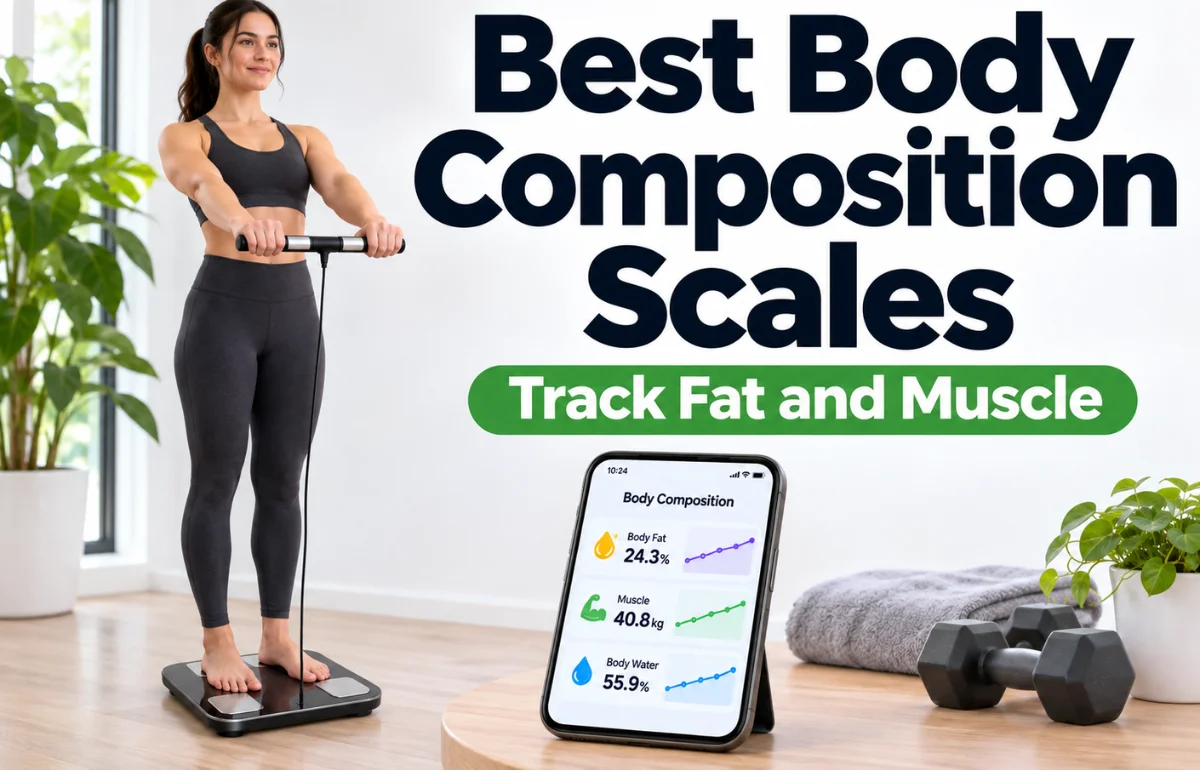
At a glance: Hume Pod 2.0 is an at-home body-composition analyzer that records fat, muscle, and body-water estimates in the Hume Health app. Core tracking does not require a subscription; premium coaching and deeper personalized analysis are optional paid upgrades. A useful body-composition record depends on comparable measurements and careful interpretation, not an isolated reading or an unsupported accuracy ranking.
Body weight tells you your total mass. It does not explain how much of a change comes from fat, lean tissue, or water. Body-composition scales add estimates of those components, which can help you review changes alongside your training and everyday habits.
This 2026 guide focuses on what those estimates mean, how Hume Pod 2.0 fits into a home routine, and which claims need closer scrutiny. It does not present a laboratory test or recommend competing products.
What to Compare in a Body-Composition Scale
A meaningful comparison separates measurements, usability, and app access. A longer list of displayed values does not establish greater accuracy.
- Measurement definitions: Body-fat percentage, fat mass, skeletal muscle mass, and lean mass describe different things.
- Measurement routine: Foot placement, hand contact where applicable, posture, and preparation affect consistency.
- History: The record should make comparable measurements easy to review over time.
- Included access: Distinguish core tracking from optional paid guidance.
- Validation: Accuracy claims need evidence for the exact device, measurement, and reference method involved.
These criteria are a way to evaluate information, not a claim that every device has been tested under identical conditions.
Hume Pod 2.0: Home Body-Composition Tracking
Hume Pod 2.0 uses hand and foot sensors to estimate body composition, including regional information for the arms, legs, and trunk. Measurements appear in the companion Hume Health app, where they can be reviewed as a personal history rather than a series of disconnected weigh-ins.
!Person standing on Hume Pod 2.0 while holding its hand-sensor bar
Hume Pod 2.0 uses foot contacts and a handheld sensor bar during measurements.
The redesigned model includes solid metal sensors, a contact check before readings, and shielded electronics. These are current hardware features, not a guarantee that every result will match a clinical scan.
Its body-composition information includes:
- Body-fat percentage and fat-mass estimates.
- Muscle and skeletal-muscle estimates.
- Visceral-fat estimates.
- Body-water information.
- Regional body-composition estimates.
Core tracking in the Hume Health app does not require a subscription. Premium coaching and deeper personalized analysis are optional paid upgrades, separate from included tracking.
Hume Pod 2.0 is not simply a step-on weight measurement when taking a full body-composition reading: hand contact and positioning are part of the process. Follow the device instructions rather than assuming that standing on the platform alone completes the same measurement.
What Accuracy Research Actually Shows
A 2021 hospital study published in JMIR mHealth and uHealth found median fat-mass underestimation ranging from 2.2 to 4.4 kg across the commercial smart scales it examined. Body-weight measurements agreed more closely with the reference method than body-composition estimates did.
Hume Pod 2.0 was not included in that study. The finding explains why accurate weight measurements do not automatically validate a body-fat estimate; it is not an error range for Hume Pod 2.0 or a ranking of current products.
Accuracy and repeatability also differ. A device can give consistent results while still differing from a reference measurement. Correlation alone does not show that individual readings are interchangeable with a scan.
Read Fat and Muscle Measurements Separately
Body-fat percentage expresses estimated fat relative to total weight. Fat mass describes an estimated amount. A changing percentage does not, by itself, establish an equal change in the amount of fat.
Lean mass is not synonymous with skeletal muscle. It includes water and other non-fat tissues, so an overnight increase in lean mass is not proof that you built the same amount of muscle.
A visceral-fat score is also an estimate, not an image of the fat around individual organs. Interpret it within the device’s reporting system rather than converting it directly into another manufacturer’s rating.
Keep Measurements Comparable
A home body-composition history becomes easier to interpret when the routine stays similar.
- Follow the device’s placement, grip, and posture instructions.
- Keep timing relative to meals, drinks, and exercise similar.
- Note unusual hydration, illness, travel, or demanding workouts.
- Review repeated observations rather than changing habits after one result.
- Keep separate baselines if you change devices or measurement methods.
Do not deliberately dehydrate yourself or repeat measurements until a preferred result appears. Neither makes the history more informative.
Different devices can use different electrode layouts and calculations. A difference between scales is not, by itself, evidence that your body changed between measurements.
Where Hume Band 2.0 Fits
Hume Band 2.0 provides sleep, activity, strain, and recovery trends. When both products are used, the companion Hume Health app brings wearable information and body-composition history together.
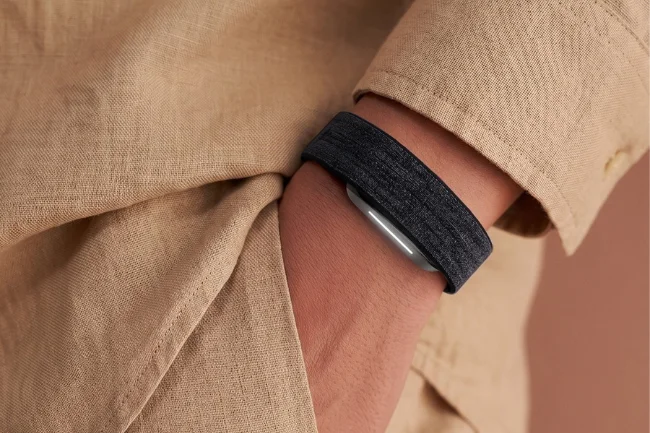
Both products work independently. Hume Band 2.0 does not require Hume Pod 2.0, and Hume Pod 2.0 does not require the wearable.
Seeing the records together adds context, not proof of cause and effect. A disrupted night’s sleep and a changed composition estimate do not establish that one caused the other.
FAQ
Can Hume Pod 2.0 Replace a DEXA Scan?
No. Hume Pod 2.0 uses bioelectrical impedance rather than X-ray imaging. Its consumer estimates do not replace medically indicated testing, and results from different methods should retain separate baselines.
Does Hume Pod 2.0 Require a Subscription?
No subscription is required for core Hume Health app tracking. Premium coaching and deeper personalized analysis are optional paid upgrades.
Do I Need Both Hume Devices?
No. Hume Pod 2.0 records body-composition estimates independently. Hume Band 2.0 also works on its own for wearable tracking.
Does a Higher Muscle Estimate Mean I Gained Muscle?
Not necessarily. Measurement conditions and body-water changes can affect estimates. Review comparable readings alongside your training record rather than assigning a tissue change to one result.
Can I Compare Body-Fat Percentages Across Scales?
Do not treat them as interchangeable. Different methods and calculations can produce different values. Track changes within the same device history.
Can a Body-Composition Scale Diagnose a Health Problem?
No. Consumer estimates are not a diagnosis. Persistent symptoms or unexplained changes need appropriate medical assessment, even if an app score appears reassuring.
Conclusion
The best body composition scale for a particular routine is one whose measurements and limitations the user understands. Hume Pod 2.0 provides connected home estimates with included core tracking; Hume Band 2.0 adds optional wearable context. For tracking fat and muscle in 2026, the useful record is a consistent personal history, not a promise that every reading is exact.