Bioregulators are short-chain peptides, typically two to four amino acids, first characterized by Russian gerontology research in the Khavinson line of studies. Because of their small size and simple sequences, they are inexpensive to synthesize at high purity and have become common reference compounds in cell-signaling and tissue-specific research models. Below is a working overview of the bioregulators most frequently requested by laboratories in 2026, along with the documentation researchers should expect from any supplier.
What Makes a Peptide a “Bioregulator”
The term describes a class of short synthetic peptides modeled on naturally occurring tissue-specific regulatory sequences. Each is associated in the literature with a particular tissue or organ system — vascular, pineal, immune, or connective — and is used in in vitro and pre-clinical models examining gene expression and cell proliferation in that tissue type. They are not hormones and are not characterized as having systemic physiological effects; their research use centers on cellular and molecular signaling pathways.
Compounds Most Cited in Current Research
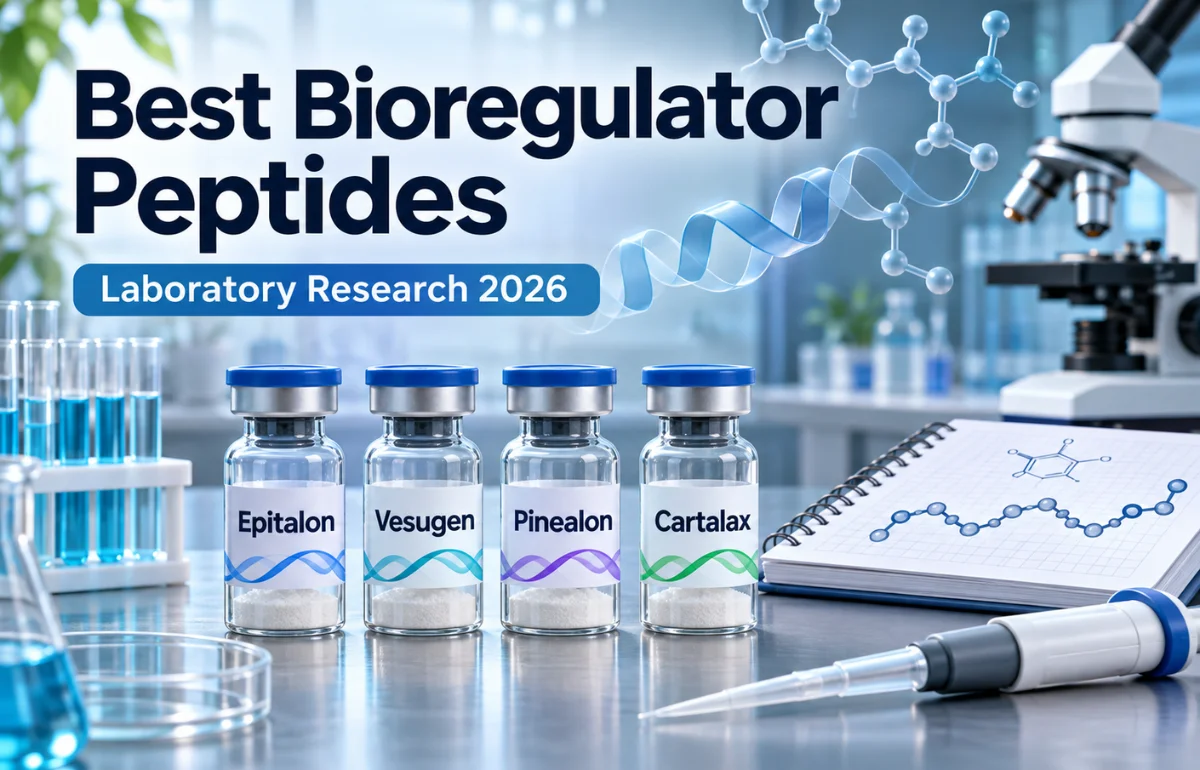
- Epitalon (Ala-Glu-Asp-Gly) — the most widely studied bioregulator, examined in pineal gland and telomerase-activity research.
- Vesugen (Lys-Glu-Asp) — a tripeptide studied in vascular endothelial cell models, particularly nitric oxide signaling and arterial wall elasticity.
- Thymalin / Thymogen — examined in immune cell regulation and T-cell differentiation models.
- Pinealon — studied for neuronal and cognitive-function cell models.
- Cartalax — examined in connective tissue and chondrocyte research.
Each of these appears in a limited but consistent body of peer-reviewed literature, most originating from the same research group, which makes cross-referencing published methodology straightforward when designing a new protocol.
What to Verify Before Sourcing
Because bioregulators are simple, low-molecular-weight sequences, purity and identity verification matter more than with larger, more complex peptides — a short sequence is easy to synthesize but just as easy to under-document. Before ordering a batch, researchers should confirm:
1. A batch-specific Certificate of Analysis reporting HPLC purity and mass spectrometry identity confirmation, not a generic datasheet reused across lots.
2. Reconstitution and storage guidance specific to lyophilized peptides — most require storage at -20°C and refrigeration only after reconstitution.
3. A Safety Data Sheet covering handling precautions for laboratory personnel.
4. Clear Research Use Only labeling with no suggestion of human or veterinary application.
Suppliers such as 4-Amino-Labs publish batch-specific Certificates of Analysis for their bioregulator line, including Vesugen, alongside Safety Data Sheets — a baseline researchers should expect from any vendor in this category rather than a differentiator unique to one supplier.
Takeaway
Bioregulator peptides remain a narrow but active research niche. Their value lies less in the diversity of the compound class and more in the depth of published literature behind a handful of well-characterized sequences. Laboratories evaluating a new source should prioritize documented identity and purity over price, given how inexpensive these short sequences are to under-synthesize without anyone noticing on an uncharacterized sample.
This article is provided for educational and laboratory research information only. The peptides discussed are not intended for human or veterinary use, and their safety or effectiveness for medical purposes has not been established. Always follow applicable regulations and appropriate laboratory safety procedures.