If you’ve spent any time researching skin rejuvenation treatments, you’ve almost certainly come across laser skin resurfacing. It gets mentioned alongside chemical peels and microneedling, often lumped in with all other “skin renewal” procedures, but it’s genuinely in a category of its own. I’ve spoken with dozens of people who went into consultations confused about what laser resurfacing actually involves — and came out even more confused. So here’s a clear, honest breakdown of what this treatment is, how it works, who benefits from it most, and what the recovery really looks like.
What Is Laser Skin Resurfacing?
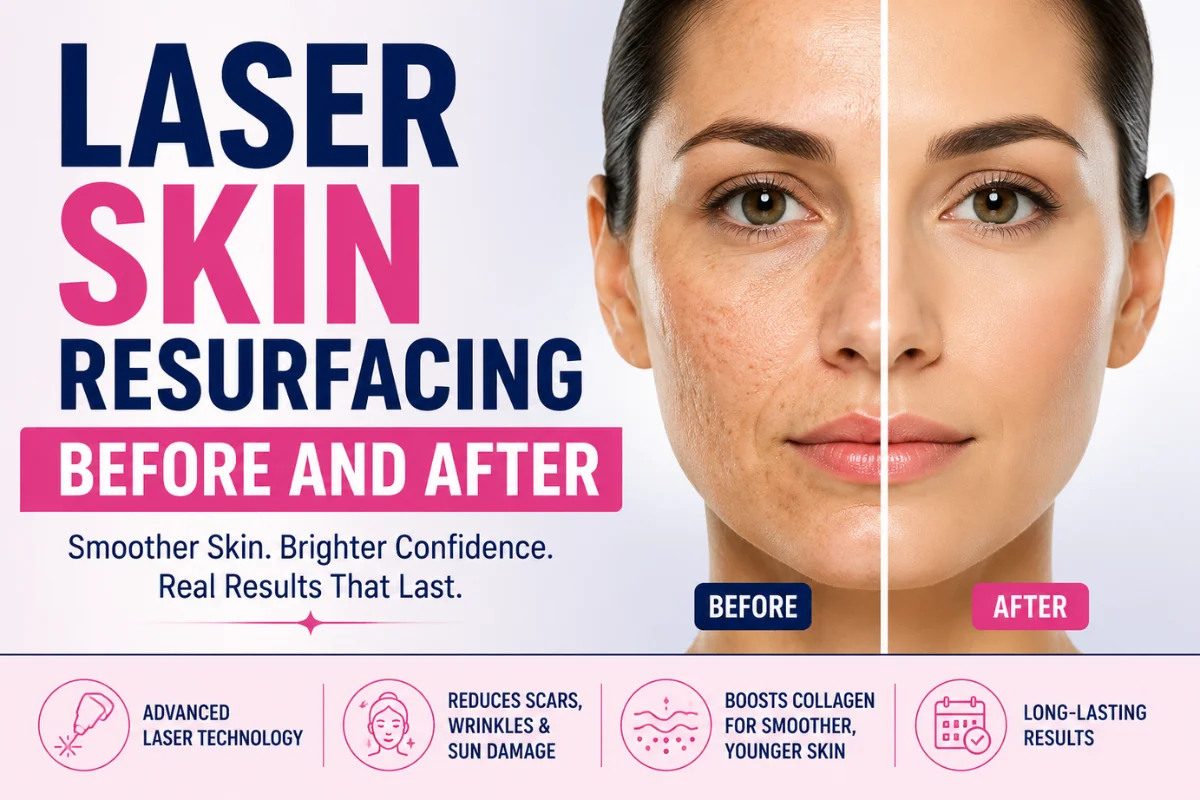
At its core, laser skin resurfacing is a dermatological procedure that uses concentrated beams of light energy to remove damaged outer layers of skin and stimulate the production of new collagen in the layers beneath. The controlled removal of skin tissue triggers your body’s natural healing process, which replaces old, uneven, or scarred skin with fresher, smoother tissue over time.
It’s been used clinically since the early 1990s and has grown considerably more precise and safer with advances in laser technology. The American Academy of Dermatology recognizes it as an effective option for treating a wide range of skin concerns, including fine lines, acne scars, uneven pigmentation, sun damage, and enlarged pores.
The procedure isn’t one-size-fits-all. Depending on what you’re treating and how much downtime you can manage, the approach varies significantly.
Types of Laser Skin Resurfacing
Ablative Lasers
Ablative lasers physically remove the outermost layer of skin (the epidermis) while simultaneously heating the dermis beneath it. This dual action is what makes them so effective for deeper wrinkles and significant scarring. The two most common types are:
- CO2 Lasers: Carbon dioxide lasers operate at a wavelength of 10,600 nanometers. They’re considered the gold standard for treating deep wrinkles, acne scars, and significant photoaging. Results are dramatic, but recovery is the most demanding — typically two to three weeks of visible healing.
- Erbium Lasers: Erbium:YAG lasers work at 2,940 nm and are absorbed more precisely by water in skin cells, which means less heat spreads to surrounding tissue. They’re used for moderate wrinkles and surface discoloration, and recovery tends to be shorter than with CO2, usually one to two weeks.
Non-Ablative Lasers
Non-ablative lasers work differently. Rather than removing skin, they deliver heat energy into the dermis without touching the epidermis at all. This stimulates collagen remodeling beneath the surface while leaving the outer skin intact. Recovery is minimal — often just some redness for a day or two — but results are more gradual and typically require multiple sessions.
Common non-ablative options include Nd:YAG lasers and pulsed-dye lasers.
Fractional Lasers
Fractional technology, whether ablative or non-ablative, treats only a fraction of the skin at a time, leaving surrounding tissue untouched. This is what allows faster healing compared to fully ablative treatments. Fraxel is probably the most well-known brand in this category, and it’s widely used for acne scarring, melasma, and sun-induced pigmentation.
Ablative vs. Non-Ablative vs. Fractional: A Quick Comparison
Note: Costs vary significantly by provider, location, and area treated. These are general ranges based on published data from the American Society of Plastic Surgeons (2024).
What Conditions Does Laser Resurfacing Treat?
This is where laser resurfacing earns its reputation. It’s genuinely versatile, addressing concerns that many topical treatments can’t meaningfully reach.
Acne Scars
Atrophic (depressed) acne scars are among the most common reasons people pursue laser skin resurfacing. Fractional CO2 and erbium lasers can significantly reduce the depth and visibility of rolling, boxcar, and ice-pick scars. A 2022 systematic review published in the Journal of Cosmetic Dermatology found fractional ablative lasers to be among the most effective treatments for atrophic acne scars, with patient satisfaction rates consistently above 70%.
Fine Lines and Wrinkles
For periorbital lines (around the eyes) and perioral lines (around the mouth), ablative CO2 laser skin resurfacing has long been the benchmark. These areas respond particularly well because the skin is thinner and collagen remodeling is more pronounced there.
Sun Damage and Hyperpigmentation
Years of UV exposure leave their mark in the form of sunspots, uneven tone, and rough texture. Laser skin resurfacing targets melanin-rich cells and clears discoloration effectively. Non-ablative lasers are often chosen for pigmentation concerns in patients with lower downtime tolerance.
Enlarged Pores
Pore size isn’t something you can change with a serum — pores don’t open and close. But laser skin resurfacing can tighten the surrounding skin and reduce the visible diameter of pores by improving overall skin structure.
Skin Laxity
While laser skin resurfacing isn’t a substitute for a surgical lift, collagen stimulation from ablative procedures does improve skin firmness over time. Many patients notice a mild tightening effect that develops gradually over three to six months.
Who Is a Good Candidate?
Not everyone is the right fit for laser skin resurfacing, and good providers will tell you this upfront. Understanding the candidacy criteria before booking a consultation saves time and sets realistic expectations.
Ideal candidates tend to:
- Have fair to medium skin tones (Fitzpatrick types I–III)
- Be non-smokers or willing to stop before and after the procedure
- Have realistic expectations about results
- Be able to commit to the required downtime
- Not be currently experiencing active acne breakouts
Laser resurfacing requires extra caution if you:
- Have a history of keloid scarring
- Have active cold sores (herpes simplex) — prophylactic antivirals are typically prescribed
- Are pregnant or breastfeeding
- Have recently used isotretinoin (Accutane) — most providers recommend waiting at least six months to a year
- Have darker skin tones (Fitzpatrick types V–VI) — there’s a higher risk of post-inflammatory hyperpigmentation, though some fractional non-ablative options can be used carefully with appropriate expertise
This is why consultation with a board-certified dermatologist or plastic surgeon isn’t optional — it’s the foundation of safe treatment planning.
The Laser Skin Resurfacing Procedure: What Actually Happens
Once you’ve completed your pre-treatment prep (which typically includes stopping certain skincare actives like retinoids, using a prescribed topical regimen, and taking antivirals if relevant), a laser skin resurfacing session itself follows a fairly consistent process.
- Numbing: A topical anesthetic is applied 30–60 minutes before the procedure. For more aggressive treatments, nerve blocks or even general sedation may be used.
- Protective eyewear: Both the patient and provider wear laser-specific eye protection throughout the treatment.
- The laser pass: The provider moves the laser handpiece methodically across the treatment area. You’ll hear a clicking or pulsing sound. With ablative lasers, you may smell something similar to burning hair — this is normal and expected.
- Treatment duration: A full-face ablative treatment typically takes 30–90 minutes, depending on technique and area. Non-ablative and fractional sessions are often shorter.
- Immediate aftercare: The skin is cooled and a protective ointment or dressing is applied. Instructions for wound care begin immediately.
Recovery and Aftercare Following Laser Skin Resurfacing
Recovery is the part most people underestimate when considering laser skin resurfacing, particularly with ablative procedures.
- Days 1–3: Redness, swelling, and oozing are normal. The skin looks raw and weepy. You’ll be applying the prescribed ointment several times a day and avoiding anything that disrupts healing.
- Days 4–7: Crusting develops and begins to flake away. Do not pick at it. Picking prolongs healing and significantly increases the risk of scarring.
- Days 7–14: New skin appears — it will be very pink and sensitive. Sun avoidance is non-negotiable during this window.
- Weeks 3–6: Redness fades, though it can linger for two to three months after aggressive CO2 resurfacing. Broad-spectrum SPF 30+ sunscreen is your most important daily product during this phase and beyond.
For non-ablative treatments, this timeline compresses considerably — most people return to normal activities within one to two days, with mild redness and some flaking over the following week.
Results and Longevity
Laser skin resurfacing results aren’t immediate — and that’s worth setting expectations around upfront. Your skin needs time to produce new collagen, and meaningful improvement typically becomes visible between one and three months post-procedure. For ablative treatments, the final result often isn’t fully apparent until six months out.
The results do last — for ablative procedures, improvements in texture and wrinkle depth can persist for years with proper maintenance. However, laser skin resurfacing doesn’t stop the aging process. Sun exposure, lifestyle, and genetics all continue to influence how your skin ages after the procedure. Ongoing SPF use and a consistent skincare routine are part of sustaining your results.
Risks and Realistic Expectations
Like any medical procedure, laser skin resurfacing carries risks that are worth understanding clearly before committing, and transparency matters here.
- Common side effects: Redness, swelling, itching, and temporary hyperpigmentation are all expected parts of healing.
Serious but less common risks include:
- Infection — bacterial, viral (HSV reactivation), or fungal
- Permanent hyperpigmentation or hypopigmentation — loss of pigment is more common with aggressive CO2 treatments and in patients with darker skin
- Scarring — rare, but real, especially with improper aftercare or treatment by inexperienced providers
- Prolonged erythema — some patients experience redness lasting several months
Choosing a provider who is board-certified, experienced specifically in laser procedures, and willing to walk you through a thorough consultation is the single most important thing you can do to reduce your risk profile.
Cost Considerations
Laser skin resurfacing is not covered by insurance in most cases, as it’s considered a cosmetic procedure. According to the American Society of Plastic Surgeons, the average cost of ablative laser skin resurfacing in the United States is approximately $2,509 per treatment session, while non-ablative procedures average closer to $1,445. These figures don’t include anesthesia fees, facility costs, or aftercare products.
Many dermatology and plastic surgery practices offer financing options through third-party providers. If cost is a factor, non-ablative fractional treatments offer a lower entry point with the option to build on results over multiple sessions.
A Brief Word on Choosing the Right Provider for Laser Skin Resurfacing
The laser is only as good as the person operating it. This field has seen significant growth in med spas and non-medical settings offering laser skin resurfacing treatments, but ablative resurfacing in particular carries risks that require medical oversight.
I’d recommend seeking out a board-certified dermatologist or plastic surgeon with documented experience in laser procedures and, if possible, a portfolio of before-and-after cases for your specific concern.
Your consultation should include a skin assessment, a full discussion of your medical history, and a clear explanation of what to expect at each stage.
Conclusion
Laser skin resurfacing can genuinely transform skin that topical products simply can’t touch — particularly for acne scars, deep wrinkles, and chronic sun damage. But it requires real commitment: to the preparation, to the recovery, and to the long-term maintenance afterward.
If you’ve been on the fence, the best next step is booking a consultation with a qualified dermatologist or plastic surgeon who can assess your specific skin type, concerns, and goals. That conversation is where the real decision gets made — and it’s worth having sooner rather than later.
If you’ve been on the fence, the best next step is booking a consultation with a qualified dermatologist or plastic surgeon who can assess your specific skin care needs, concerns, and goals.
Frequently Asked Questions
1. How many laser skin resurfacing sessions will I need?
It depends on the laser type and your goals. A single ablative CO2 session often delivers significant results, while non-ablative and fractional treatments typically require three to six sessions spaced four to six weeks apart.
2. Is laser skin resurfacing painful?
Topical numbing is used for all treatments, and stronger anesthesia is available for ablative procedures. Most patients describe ablative sessions as a warming or stinging sensation rather than sharp pain, with discomfort manageable in the days following.
3. Can laser skin resurfacing be done on the neck and chest?
Yes, but with greater caution. These areas have fewer sebaceous glands, which means slower healing. Experienced providers often use less aggressive settings when treating skin below the jawline.
4. How long do results from laser skin resurfacing last?
For ablative procedures, results can last several years with proper sun protection and skincare. Non-ablative results are more modest and may require maintenance sessions annually or biannually.
5. Can laser skin resurfacing treat all skin tones?
Ablative CO2 lasers carry a higher risk of pigmentation changes in darker skin tones. However, non-ablative and certain fractional laser skin resurfacing options can be used safely on a wider range of skin types when applied by a skilled provider with experience across the Fitzpatrick scale.
Sources: American Academy of Dermatology (AAD); American Society of Plastic Surgeons (ASPS) 2024 Statistics; Journal of Cosmetic Dermatology, 2022 systematic review on fractional laser treatments for acne scarring.
You May Also Read: Tummy Skin Tightening

Dr. Sophia Martinez, MD, FAAD, is a board-certified dermatologist with over 12 years of clinical experience in aesthetic and medical skin care. She specializes in acne treatment, anti-aging, and sensitive skin conditions. At wellhealthorganic1.com, she translates complex dermatology into simple, science-backed daily skincare routines.