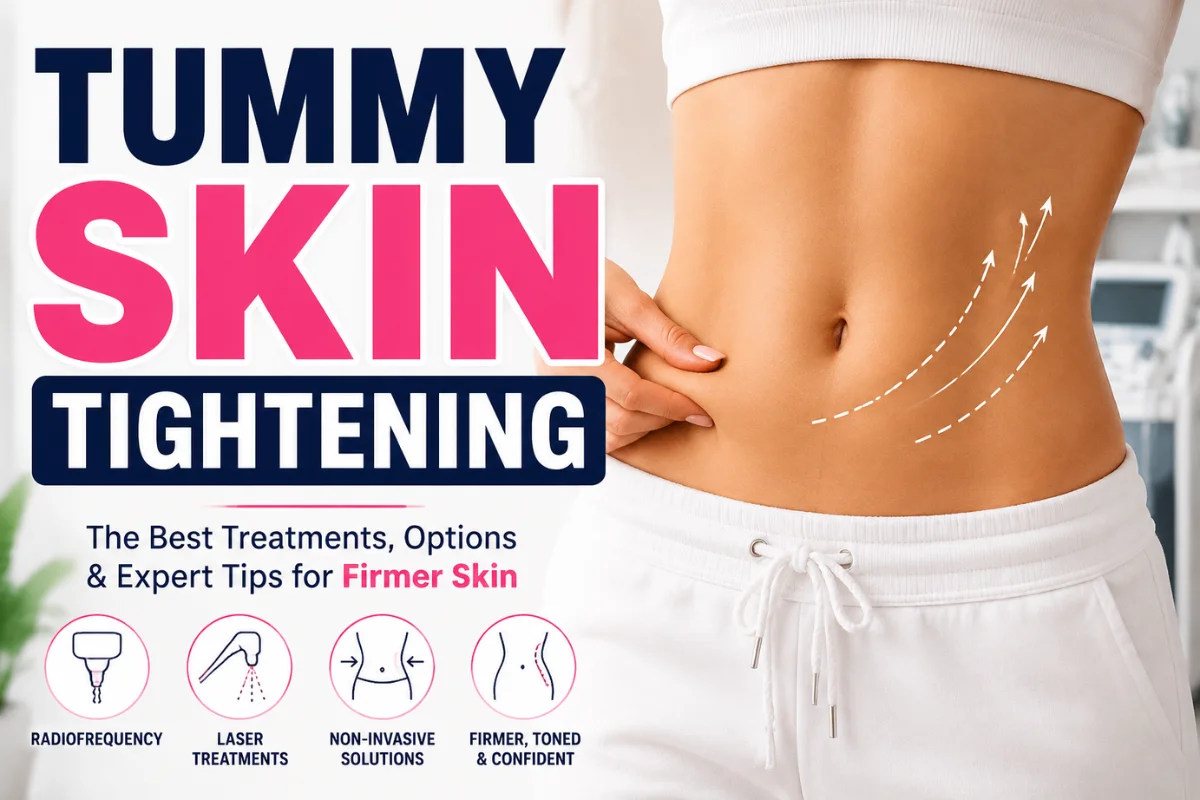
I’ve spent years reading clinical studies, interviewing dermatologists, and watching the options for tummy skin tightening evolve from basic firming creams to laser systems that cost more than a used car. If you’re here because your belly skin feels looser than it used to — after weight loss, pregnancy, or just the passage of time — this is the clearest, most honest breakdown I can give you.
The abdomen is where loose skin tends to show up first and bother people the most. But with dozens of treatments on the market and a flood of conflicting claims, knowing what to actually invest in is genuinely hard. This guide covers the full landscape — from what’s happening inside your skin to which treatments have real evidence behind them.
Why Your Tummy Skin Loses Its Tightness
Before getting into solutions, it helps to understand the problem.
Your skin’s firmness comes primarily from two structural proteins: collagen and elastin. Collagen provides tensile strength — it’s what holds things together. Elastin allows skin to stretch and snap back. When these proteins are healthy and abundant, skin bounces back after being stretched or compressed.
Several things erode that structure over time:
- Age: Collagen production declines by roughly 1% per year after age 25, according to research published in the Journal of Investigative Dermatology (Varani et al., 2006). By your 40s and 50s, the cumulative deficit becomes visible.
- Rapid weight loss: When fat is lost quickly, the skin doesn’t always contract at the same pace. The result is excess, unsupported skin.
- Pregnancy: The abdomen stretches dramatically during pregnancy, and depending on how much it stretches and how quickly, the dermis can sustain lasting structural damage.
- Sun exposure: UV radiation degrades both collagen and elastin through oxidative damage and the activation of collagen-degrading enzymes (matrix metalloproteinases).
- Genetics: Some people simply produce more collagen, or have skin that responds better to the stretch-and-rebound cycle.
Understanding this tells you something important: effective tummy skin tightening has to work at the level of collagen and elastin — either stimulating new production, tightening existing fibers, or removing excess skin altogether.
Non-Invasive Tummy Skin Tightening Treatments
Non-invasive options have improved significantly over the past decade. They won’t replicate the results of surgery, but for mild to moderate laxity, some of them deliver meaningful, measurable improvements.
Radiofrequency (RF) Treatments
Radiofrequency remains one of the most well-studied non-invasive approaches to skin tightening. RF energy penetrates the skin and heats the dermis to a controlled temperature — typically between 60°C and 70°C — which causes immediate collagen fiber contraction and, over the following months, stimulates new collagen synthesis.
Devices like Thermage, Morpheus8 (which combines RF with microneedling), and Exilis Ultra are among the most commonly used for abdominal tightening. A 2017 study in the Journal of Drugs in Dermatology found that monopolar RF treatment produced measurable improvements in skin laxity in 90% of participants, with continued improvement over six months post-treatment.
Results are gradual — most patients see full effects three to six months after treatment — and typically require maintenance sessions.
High-Intensity Focused Ultrasound (HIFU)
HIFU delivers focused ultrasound energy to precise depths beneath the skin’s surface. The most recognized brand is Ultherapy, which is FDA-cleared for lifting and tightening skin on the face and neck — and increasingly used off-label for the abdomen.
HIFU reaches the SMAS layer (the superficial muscular aponeurotic system), which sits deeper than most RF devices reach. The thermal injury at that depth triggers a robust wound-healing response, which includes new collagen formation over three to six months.
For tummy skin tightening specifically, HIFU tends to perform better on patients with moderate rather than severe laxity, and it works best when there’s reasonable skin quality to begin with.
Laser Tummy Skin Tightening
Fractional laser treatments — particularly fractional CO2 and erbium lasers — create microscopic columns of controlled thermal damage in the skin. The surrounding untouched tissue accelerates healing, and the process stimulates collagen remodeling throughout.
Non-ablative lasers like Nd: YAG and 1064nm diode lasers deliver heat without removing the top skin layer, meaning less downtime but also more modest results. Ablative fractional lasers produce stronger outcomes but come with a recovery period of several days to two weeks, depending on treatment intensity.
Laser tightening of the abdominal skin is effective for surface texture and mild to moderate laxity. It’s less effective for significant loose skin following major weight loss.
Body Contouring Devices: EMSculpt and Muscle-Based Approaches
EMSculpt NEO combines radiofrequency with high-intensity electromagnetic energy to simultaneously reduce fat and stimulate muscle contractions. It’s not primarily a skin-tightening device — it’s more accurately a body contouring and muscle-building tool — but the combination of fat reduction and improved underlying muscle tone can enhance the tightened appearance of the abdominal area.
The distinction matters. If your primary concern is the skin itself, EMSculpt NEO addresses only part of the picture.
Minimally Invasive Tummy Skin Tightening Options
Microneedling with RF (Radiofrequency Microneedling)
Devices like Morpheus8, Genius, and Vivace combine the collagen-induction effect of microneedling with the deeper heating of radiofrequency. Tiny needles penetrate the skin and deliver RF energy at controlled depths, triggering both surface-level wound healing and deeper dermal remodeling.
For the tummy, this approach works well for patients with mild to moderate laxity, stretch marks, and overall texture irregularity. Most protocols involve three to four sessions spaced four to six weeks apart, with results continuing to improve for several months afterward.
Thread Lifts
Absorbable suture threads (typically made from polydioxanone or poly-L-lactic acid) are inserted beneath the skin to provide a mechanical lift while simultaneously triggering a collagen response around the thread material. For the abdomen, thread lifts are less common than for facial tissue, and the lifting effect is modest. They’re better suited to patients who want a subtle improvement and aren’t candidates for surgery.
Surgical Tummy Skin Tightening
For significant loose skin — the kind that follows dramatic weight loss or multiple pregnancies — non-invasive and minimally invasive treatments have real limitations. Surgery is, in many cases, the most effective long-term solution.
Abdominoplasty (Tummy Tuck)
A full abdominoplasty removes excess skin and fat from the lower and mid abdomen while tightening the underlying rectus abdominis muscles if they’ve separated (diastasis recti). The result is a dramatically flatter, tighter abdominal contour.
Recovery typically involves two to four weeks of restricted activity, with full results visible at three to six months. It’s a significant procedure with real risks — infection, seroma, poor healing, scarring — but for appropriate candidates, the outcomes are transformative and long-lasting.
Mini Tummy Tuck
A mini abdominoplasty addresses the lower abdomen only, with a shorter scar and faster recovery. It’s suited to patients with loose skin confined below the navel who don’t have significant muscle separation.
Post-Bariatric Body Contouring
Patients who’ve lost large amounts of weight through bariatric surgery or sustained lifestyle change often require a panniculectomy (removal of the pannus — the apron of hanging skin and fat) or a circumferential body lift, which addresses the abdomen, flanks, and lower back simultaneously. These are more extensive procedures and are sometimes partially covered by insurance when the hanging skin causes documented medical problems like rashes, infections, or mobility issues.
Comparison Table: Tummy Skin Tightening Treatments
What About Creams for Tummy Skin Tightening?
I’ll be direct: most topical firming creams produce very modest improvements at best, and none of them come close to professional treatments for tummy skin tightening.
That said, some ingredients do have legitimate science behind them:
- Retinoids (Retinol, Tretinoin): The most evidence-backed topical ingredient for collagen stimulation. Prescription-strength tretinoin has been shown to increase dermal collagen synthesis in multiple controlled studies. Retinol does the same thing at a slower pace with less irritation.
- Niacinamide: Supports the skin barrier and has demonstrated some ability to improve skin elasticity with consistent use.
- Peptides: Signal peptides like Matrixyl (palmitoyl pentapeptide-4) have shown modest collagen-stimulating effects in vitro, though clinical data in human skin is less robust.
- Hyaluronic Acid: Improves surface hydration and plumpness but doesn’t address deep structural laxity.
Think of topicals as supportive rather than transformative. Used consistently, they can maintain results from professional treatments and support overall skin health — but they’re not a standalone solution for loose abdominal skin.
Lifestyle Factors That Support Tummy Skin Tightening
No treatment exists in a vacuum. The choices you make daily either support or undermine your skin’s structural integrity.
Protein and Collagen Nutrition
Your body builds collagen from amino acids, particularly glycine, proline, and hydroxyproline. Diets adequate in protein — and specifically rich in foods like bone broth, chicken skin, fish, eggs, and dairy — provide the raw materials for collagen synthesis. Vitamin C is essential for collagen cross-linking, so consistent intake from whole foods or supplementation supports the process.
Collagen peptide supplements have gained attention, and the research is more promising than many dermatologists initially expected. A meta-analysis published in the Journal of Drugs in Dermatology (2021) found that oral collagen supplementation significantly improved skin elasticity and hydration compared to placebo across multiple trials.
Resistance Training
Building lean muscle mass beneath the skin improves the overall contour of the abdomen. It doesn’t tighten the skin directly, but a firmer muscular foundation makes loose skin less visible and more supported. This is particularly valuable for people recovering from weight loss.
Hydration and Sun Protection
Chronically dehydrated skin loses elasticity faster. And sunscreen — genuinely the most cost-effective anti-aging investment available — prevents the UV-driven collagen degradation that accelerates laxity. Daily broad-spectrum SPF 30 or higher on exposed skin is non-negotiable.
Gradual Weight Loss
If you’re planning to lose weight, doing it gradually (generally 0.5 to 1 kg per week) gives your skin more time to adapt. The skin isn’t infinitely elastic, but slower loss reduces the degree of laxity significantly compared to rapid loss.
How to Choose the Right Tummy Skin Tightening Treatment
The right strategy depends on the degree of laxity, your recovery tolerance, your budget, and your goals.
- If your skin is mildly loose — perhaps from a moderate amount of weight loss or natural aging — a series of RF microneedling sessions combined with prescription retinoids and consistent collagen nutrition is a reasonable, effective starting point.
- If your skin is moderately loose — more visible sagging, some stretch marks, reduced elasticity — HIFU, fractional CO2 laser, or a combination approach supervised by a board-certified dermatologist or plastic surgeon will produce more meaningful results.
- If you have significant loose skin — especially following bariatric surgery, multiple pregnancies, or major weight loss — a consultation with a board-certified plastic surgeon is the most important step. Non-invasive treatments will not adequately address redundant skin at that level, and a surgical approach is likely the most realistic path to the results you’re looking for.
In all cases, get your consultation from a board-certified dermatologist or plastic surgeon — not a med spa technician operating without physician oversight. The device matters less than the person selecting and administering the treatment.
Realistic Expectations for Tummy Skin Tightening Results
One of the most common frustrations I hear from people who’ve invested in tummy skin tightening treatments is that they expected dramatic results from non-invasive options. The technology has improved enormously, but the honest reality is this: no device tightens skin to the degree that surgery can.
Non-invasive treatments produce gradual, meaningful improvement — typically 20–40% improvement in skin laxity depending on the device, the patient, and the treatment protocol. For many people, that’s genuinely satisfying. For others, especially those with significant loose skin, it falls short of their expectations.
Setting realistic expectations before you spend money is the most important thing you can do.
Conclusion
Tummy skin tightening is not a one-size-fits-all category. It’s a spectrum — from topical retinoids and collagen supplementation at one end to full abdominoplasty at the other — and where you land on that spectrum should be guided by the actual degree of laxity you’re dealing with, not marketing promises.
My recommendation: start with a consultation from a board-certified professional who can assess your skin in person, explain what’s realistic for your anatomy, and help you build a plan that aligns with your goals and budget. Whether that plan involves RF microneedling, laser resurfacing, or a surgical consult, having a qualified expert in your corner makes all the difference.
If you’re ready to take the next step, use resources like the American Board of Plastic Surgery’s physician locator (abplsurg.org) or the American Academy of Dermatology’s Find a Dermatologist tool (aad.org) to find credentialed providers in your area.
One of the most common frustrations I hear from people at wellhealthorganic1.com who’ve invested in tummy skin tightening treatments is that they expected dramatic results from non-invasive options
Frequently Asked Questions
1. How many sessions of radiofrequency treatment does it take to see results for tummy skin tightening?
Most RF protocols for the abdomen involve one to three sessions, depending on the device and the degree of laxity. Results continue improving for three to six months after the final treatment.
2. Can tummy skin tightening treatments help with stretch marks?
Some treatments — particularly RF microneedling and fractional CO2 laser — improve the appearance of stretch marks alongside tightening skin, though complete elimination isn’t realistic. Older, white/silver stretch marks respond less predictably than newer, red or purple ones.
3. Is skin tightening after pregnancy safe while breastfeeding?
Most energy-based non-invasive treatments are generally deferred until after breastfeeding is complete, both for safety and because hormonal fluctuations during that period affect skin behavior. Discuss timing with your provider.
4. How long do the results of a tummy tuck last?
The results of an abdominoplasty are considered permanent in terms of removed skin — it doesn’t grow back. However, significant weight gain, future pregnancies, or continued aging will affect the results over time.
5. Does loose skin after weight loss always require surgery?
Not always. Mild to moderate laxity following moderate weight loss often responds reasonably well to energy-based treatments and lifestyle measures. However, significant loose skin — particularly the kind with a functional impact — typically requires surgical removal for meaningful correction.
Sources and references: Varani J, et al. (2006). “Decreased Collagen Production in Chronologically Aged Skin.” Journal of Investigative Dermatology. | Alam M, et al. (2010). “Radiofrequency Tightening of Facial Skin.” Journal of the American Academy of Dermatology. | Bolke L, et al. (2019). “A Collagen Supplement Improves Skin Hydration, Elasticity, Roughness, and Density.” Nutrients. | American Board of Plastic Surgery: abplsurg.org | American Academy of Dermatology: aad.org
For More Reading: Thai Beauty Products

Dr. Sophia Martinez, MD, FAAD, is a board-certified dermatologist with over 12 years of clinical experience in aesthetic and medical skin care. She specializes in acne treatment, anti-aging, and sensitive skin conditions. At wellhealthorganic1.com, she translates complex dermatology into simple, science-backed daily skincare routines.