
Anonibs is a commonly searched spelling for Anon-IB, an anonymous image board that became widely associated with user-posted images, regional threads, and serious privacy abuse. In simple terms, Anonibs refers to an anonymous forum-style platform where users could post and discuss images without using their real names. While anonymous boards can be used for general discussion, Anon-IB became notorious because reports linked it to non-consensual intimate image sharing, harassment, and stolen private content. Dutch police seized the original Anon-IB forum in 2018 during an investigation into criminal offences, according to multiple reports.
That distinction matters. Anonibs should not be treated as just another privacy forum or “free speech” platform. The real story is more uncomfortable: it shows how online anonymity can protect vulnerable speech in one context and enable serious harm in another.
I have reviewed many anonymous-platform articles over the years, and the weakest ones usually make the same mistake. They describe anonymity as if it is automatically good. It is not. Anonymity is a tool. What matters is how people use it, what moderation exists, and whether consent is respected.
What Does Anonibs Mean?
Anonibs is usually used as a search variation of Anon-IB, which stands for “Anonymous Image Board.” The name points to two core ideas: anonymous posting and image-based discussion.
Anonymous image boards are not new. They grew from early internet forum culture, where users could post under temporary names, aliases, or no names at all. Some communities used that format for memes, niche hobbies, local gossip, fandoms, or technical discussions.
Anon-IB, however, became known for something darker. Reports described it as a place where users shared intimate images without consent, sometimes organized by country, region, school, or local area. That location-based organization made the harm more personal because victims were not just exposed online; they could be identified in their own communities.
So when people search for Anonibs today, they are usually not only asking, “What was this website?” They may also be asking whether it still exists, why it was shut down, whether archives are safe, and what someone can do if private images appear online.
A Short History of Anonibs
Anonibs did not appear in isolation. It came from the broader culture of anonymous message boards and imageboards that became popular in the 2000s and 2010s.
The early appeal was simple. Users could post quickly, avoid public profiles, and speak without attaching content to a permanent identity. That format felt raw, fast, and different from polished social media platforms.
But low-friction anonymity also created obvious problems. When users do not fear social consequences, some people become more willing to post harmful, illegal, or abusive content. That is exactly where Anon-IB’s reputation changed from an anonymous image board to a name closely tied to image-based abuse.
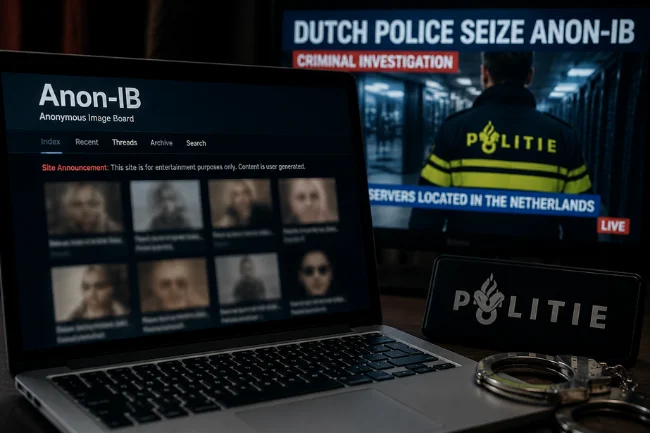
In April 2018, Dutch authorities seized the Anon-IB forum as part of a criminal investigation. ABC reported that the site hosted images of thousands of women from around the world that were posted without permission, and Vice reported that Dutch cybercrime teams seized the forum after its servers were found in the Netherlands.
That seizure is the central fact that many thin articles skip or soften. Anonibs is not just an internet-history keyword. It is part of the wider conversation about non-consensual intimate imagery, online harassment, platform accountability, and digital safety.
Why Did People Use Anonymous Image Boards?
People used anonymous image boards for several reasons, and not all of them were harmful.
Some users wanted privacy. Others wanted to discuss sensitive topics without revealing their identity. Some liked the chaotic, unfiltered culture. Others were drawn to local boards because they felt more specific than large social networks.
The problem begins when anonymity is combined with weak moderation, image uploads, local targeting, and a culture that rewards exposure or humiliation. That combination can turn a discussion board into a pipeline for abuse.
Here is a clearer breakdown.
| Use Case | Harmless or Risky? | Why it Matters |
|---|---|---|
| Anonymous discussion | Can be harmless | Useful for privacy, whistleblowing, or sensitive topics when rules are enforced |
| Meme and image sharing | Mixed | Depends on whether images are legal, consensual, and moderated |
| Local gossip threads | Risky | Can lead to doxxing, harassment, and false claims |
| Sharing private images | Harmful and often illegal | Violates consent and can cause serious personal damage |
| Archives and reposts | High risk | Removed content can reappear and spread further |
| “Mirror” sites | High risk | May host illegal content, scams, malware, or impersonation pages |
The honest takeaway is this: anonymity itself is not the villain. Unaccountable anonymity plus abusive content is the danger.
Anonibs vs Other Anonymous Platforms
People often compare Anonibs with 4chan, Reddit, Discord, or private forums. That comparison is useful, but only if it is not lazy.
These platforms are not the same. They differ in structure, moderation, identity systems, visibility, and reporting tools.
| Platform Type | Identity Style | Main Content Format | Moderation Level | Main Risk |
|---|---|---|---|---|
| Anon-IB / Anonibs-style boards | Mostly anonymous | Image threads and local boards | Historically weak or inconsistent | Non-consensual image sharing, harassment, doxxing |
| 4chan-style imageboards | Anonymous or semi-anonymous | Fast-moving image/text threads | Board-dependent | Extremes of speech, harassment, shock content |
| Pseudonymous accounts | Communities and discussion threads | Community and platform rules | Brigading, harassment, misinformation | |
| Discord | Account-based servers | Private or semi-private chat | Server and platform moderation | Closed-group abuse, grooming, content trading |
| Quora-style anonymous posting | Account-backed anonymity | Q&A content | Stricter platform controls | Misinformation or personal attacks |
This is where many competitor articles fail. They throw “Reddit” or “Discord” into an alternatives section without explaining that private servers and public forums carry different risks.
A safer alternative is not just “another anonymous site.” A safer alternative is a platform with clear rules, reporting tools, moderation, identity controls, and a serious policy against non-consensual intimate imagery.
Is Anonibs Still Active?
The original Anon-IB forum was seized by Dutch police in 2018. That does not mean every website using a similar name, spelling, or mirror-style branding is legitimate, safe, or connected to the original platform.
This is where readers need caution. Some sites online use old names because they attract search traffic. Others may imitate dead platforms to collect clicks, push malware, promote adult content, or exploit curiosity.
I would not recommend trying to access Anonibs mirrors, archives, or clone sites. Even if curiosity is the reason, the risk is obvious: you may encounter illegal content, malware, scams, or material involving people who never consented to being posted.
If your goal is research, use reputable journalism, cybersecurity reporting, legal analysis, and digital-rights resources instead of visiting questionable boards.
The Legal and Ethical Problem
The biggest issue around Anonibs is consent.
Sharing someone’s intimate image without permission is not just “drama,” “gossip,” or “internet culture.” It can be image-based sexual abuse. It can damage someone’s relationships, job prospects, mental health, safety, and reputation.
In some cases, private images are taken from hacked cloud accounts, stolen phones, old relationships, fake profiles, or coercive conversations. In other cases, people repost images they found elsewhere and pretend that reposting is harmless because they were not the original uploader. That excuse does not hold up ethically.
The internet has made copying easy, but easy does not mean acceptable.
The legal picture varies by country and region, but the overall direction is clear: governments and platforms are taking non-consensual intimate imagery more seriously. The U.S. Federal Trade Commission has also published current guidance on image-based abuse, including platform takedown responsibilities under newer rules.
If you are writing about Anonibs on an authoritative website, do not frame it as a cool anonymous-sharing tool. That angle is outdated and irresponsible. The better framing is digital anonymity, platform abuse, online consent, and what users should do if they are affected.
What To Do If Your Image Appears on an Anonibs-Style Site
This section is often missing from articles, even though it may be the most useful part for real searchers.
If someone finds their private image on an anonymous image board, the first reaction is usually panic. That is understandable, but panic can lead to mistakes, such as messaging the poster, threatening strangers, or repeatedly visiting unsafe pages.
A more practical response looks like this:
First, preserve evidence. Save the page URL, date, visible usernames, screenshots, and any related messages. Do this carefully without resharing the image.
Second, report the content to the website, host, search engine, or platform where it appears. Google has a removal process for personal explicit images and artificial intimate imagery in Search results.
Third, use dedicated support tools. StopNCII.org helps adults create digital fingerprints, or hashes, of intimate images directly on their device so participating companies can detect and block matching uploads without receiving the actual image.
For people whose nude, partially nude, or sexually explicit images were taken before they were 18, NCMEC’s Take It Down service is designed to help limit online spread using hash-matching technology.
Fourth, contact local authorities or a qualified legal professional if threats, extortion, hacking, stalking, or underage content is involved.
Fifth, do not blame yourself. The person who shared or traded the image without consent caused the harm.
Why Anonibs Still Gets Search Traffic
Anonibs continues to get searches because it sits at the intersection of curiosity, fear, digital history, and reputation risk.
Some people search for it because they heard the name in an article or forum. Some want to know whether old archives still exist. Some are worried their images might be online. Others are researching online anonymity, revenge porn, or imageboard culture.
That mixed intent is why an article on Anonibs must be careful. If the content only explains “what it is,” it is too shallow. If it tells people how to find mirrors, it becomes unsafe. If it ignores victim support, it misses the most important user need.
A strong article should answer the keyword while guiding the reader toward safer, legal, and more useful information.
Common Myths About Anonibs
Myth 1: “Anonymous means untraceable.”
No. Anonymous platforms can still leave technical traces. Servers, logs, payment records, device data, usernames, reused emails, image metadata, and user behavior can all expose people.
Myth 2: “If an image is already online, reposting it is fine.”
No. Reposting can repeat the harm. Consent does not transfer just because content is visible somewhere else.
Myth 3: “Anonibs was only about free speech.”
That is too convenient. Anonymous spaces can support free expression, but Anon-IB became widely known because of non-consensual intimate image abuse and law enforcement action.
Myth 4: “Archives are safer than live boards.”
Not necessarily. Archives can preserve harmful material, expose victims again, and attract people looking for removed content.
How To Talk About Anonibs Responsibly
If you are a publisher, blogger, researcher, or SEO writer, this topic needs more care than a normal tech explainer.
Use accurate language. Say “non-consensual intimate images” or “image-based abuse” when that is what you mean. Avoid casual phrases that make the harm sound smaller than it is.
Do not link to active mirrors or suspicious archives. That creates risk for readers and may help abusive sites gain traffic.
Add a current-status section. Readers need to know that the original Anon-IB was seized in 2018 and that clone sites should be treated with caution.
Add support resources. This turns the article from curiosity content into genuinely useful content.
Keep the tone factual. Do not sensationalize victims, quote abusive usernames, or describe explicit material in detail.
That is the difference between thin traffic content and responsible publishing.
Final Takeaway
Anonibs is best understood as a search term connected to Anon-IB, an anonymous image board that became notorious for non-consensual intimate image sharing and was seized by Dutch authorities in 2018. The wider lesson is not that anonymity is always bad. The lesson is that anonymous platforms need strong rules, real moderation, and respect for consent.
If you are researching Anonibs, stay with credible sources and avoid suspicious mirrors or archives. If you are affected by image-based abuse, preserve evidence, report the content, use trusted removal tools, and seek help from qualified support organizations or local authorities.
FAQs About Anonibs
What is Anonibs?
Anonibs usually refers to Anon-IB, an anonymous image board linked to image sharing, local threads, and serious privacy abuse concerns.
Why was Anonibs shut down?
The original Anon-IB forum was seized by Dutch police in 2018 during an investigation into criminal offences involving non-consensual intimate images.
Is Anonibs legal to use?
Laws vary by location, but viewing, sharing, requesting, or reposting non-consensual intimate images can create serious legal risk.
Are Anonibs archives safe?
No archive should be assumed safe. Some may contain harmful content, malware, scams, or reposted material involving people who did not consent.
What should I do if my image appears online?
Preserve evidence, report the content, request search removal, use tools like StopNCII.org or Take It Down where appropriate, and contact local authorities if threats, hacking, or underage content is involved.

Marcus Vance is a digital journalist and trends analyst with over 7 years of experience covering technology, business, and lifestyle. At wellhealthorganic1.com, he delivers research-driven guides on emerging trends, productivity tools, and practical life hacks to help readers simplify routines and make informed decisions.