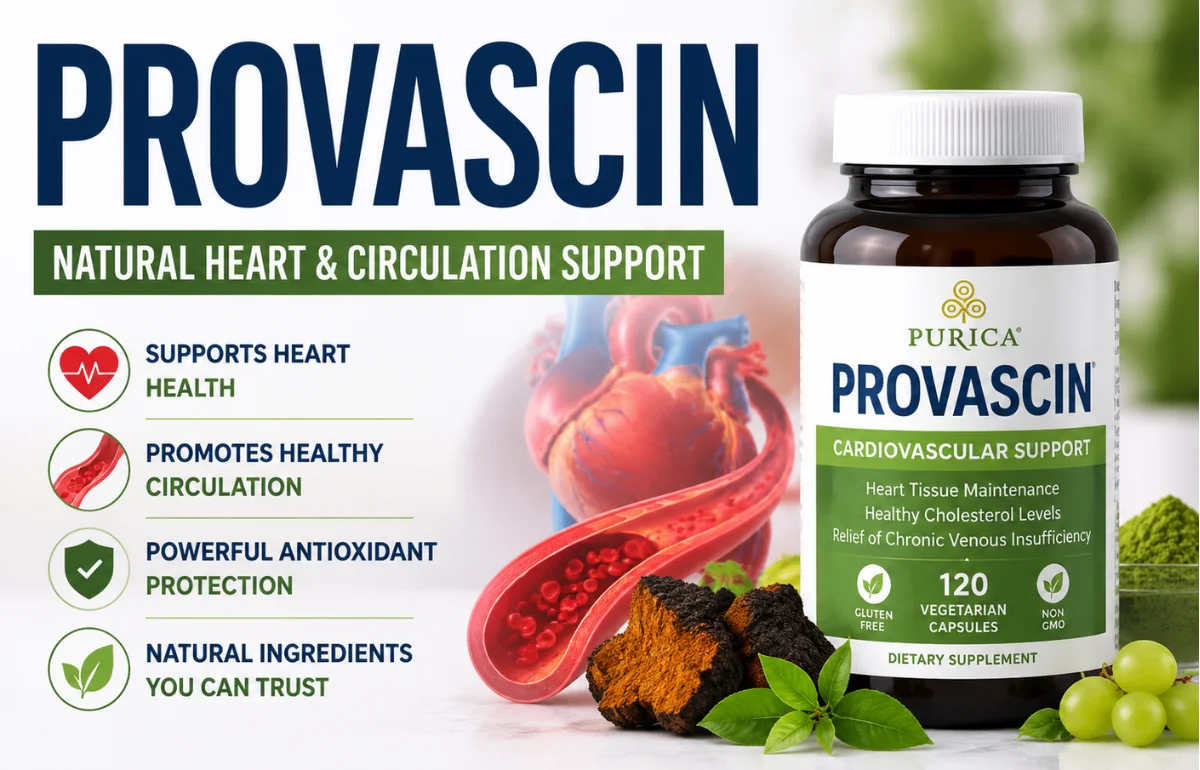
Provascin is a natural health supplement from PURICA that is marketed for cardiovascular support, circulation, healthy cholesterol levels, chronic venous insufficiency support, and antioxidant protection. In simple terms, it is a capsule-based formula that combines nutrients, mushroom compounds, antioxidants, and plant extracts commonly associated with heart, blood vessel, and metabolic wellness. It is not a prescription heart medication, and I would not treat it as a replacement for blood pressure medicine, cholesterol medication, blood thinners, diabetes medication, or medical care for chest pain, shortness of breath, swelling, or diagnosed heart disease.
When I review a supplement like Provascin, I look past the marketing language first. The real questions are simple: what is inside it, what does the evidence say, who might benefit, who should avoid it, and whether the product makes sense for the person considering it.
What Is Provascin?
Provascin is a cardiovascular support supplement made with a blend of L-Carnitine, alpha-ketoglutaric acid, organic micronized Chaga, CoQ10, betaine hydrochloride, DL-alpha-lipoic acid, grape seed extract, and green tea extract, according to a public retailer product listing for PURICA Provascin 120 capsules. The same listing describes it as gluten-free and non-GMO, with vegetarian capsule formatting.
The formula is positioned around several health areas: heart tissue maintenance, healthy glucose metabolism, cholesterol support, circulation, chronic venous insufficiency, and oxidative stress. Those are broad claims, so they need careful reading.
A smart reader should separate three things:
- What individual ingredients may support
- What the complete Provascin formula has been proven to do
- What your personal health situation requires
That distinction matters because an ingredient can have research behind it, while the full product blend may not have strong clinical trial evidence as a complete formula.
Provascin Ingredients at a Glance
Here is the ingredient profile listed publicly for each capsule.
| Ingredient | Amount Per Capsule | Why It Is Included |
|---|---|---|
| L-Carnitine | 188 mg | Supports energy metabolism, especially fatty acid transport into mitochondria |
| Alpha-ketoglutaric acid | 125 mg | Involved in cellular energy pathways |
| Certified organic micronized Chaga | 125 mg | Mushroom extract associated with antioxidant and immune-related activity |
| CoQ10 | 38 mg | Supports cellular energy production and antioxidant activity |
| Betaine hydrochloride | 31 mg | Related to digestion and methylation pathways |
| DL-alpha-lipoic acid | 13 mg | Antioxidant compound studied in glucose and nerve health contexts |
| Grape seed extract | 9 mg | Source of polyphenols and proanthocyanidins |
| Green tea extract | 9 mg | Source of plant antioxidants, including catechins |
The non-medicinal ingredients listed are magnesium stearate from a plant source, microcrystalline cellulose, and hypromellose.
One thing missing from most online discussions is a practical dose of reality check. A single capsule does not contain a large amount of every ingredient. If someone takes several capsules daily, the intake rises, but so does the importance of checking medication interactions and tolerance.
How Provascin May Support Heart and Circulation Health
The formula appears to focus on three overlapping areas: cellular energy, blood vessel support, and antioxidant protection.
CoQ10 and L-Carnitine are the two most recognizable heart-related nutrients in the formula. CoQ10 helps cells produce energy and acts as an antioxidant. Mayo Clinic notes that CoQ10 supplements seem safe for many people when taken as directed, though side effects can include stomach upset, nausea, diarrhea, dizziness, sleep problems, headache, rash, and fatigue.
L-Carnitine helps the body turn food into usable energy, and the NIH Office of Dietary Supplements describes carnitine as a compound involved in energy production. Research on L-Carnitine and cardiovascular health is interesting but not settled. Some literature reviews discuss possible benefits for heart energy metabolism and heart function, while other research raises questions about long-term cardiovascular safety through TMAO production in the gut.
That is why I would not describe Provascin as a guaranteed heart-health solution. A more honest description is this: Provascin contains several ingredients with plausible cardiovascular, metabolic, and antioxidant roles, but people with heart disease need medical guidance rather than self-directed supplement use.
Provascin Benefits: What Sounds Reasonable and What Needs Caution
The most reasonable potential benefits of Provascin are general support benefits, not disease-treatment promises.
It may support daily cardiovascular wellness in people who already follow a heart-conscious lifestyle. It may also appeal to adults interested in CoQ10, L-Carnitine, antioxidants, and mushroom-based wellness formulas.
The public product listing mentions support for healthy cholesterol levels, relief of chronic venous insufficiency, improved weight management, stress reduction, and removal of toxic tissue waste. Some of these claims need more cautious wording.
For example, grape seed extract has been studied for circulation, swelling, blood pressure, and lipid markers. NCCIH notes that some studies suggest grape seed extract may help with chronic venous insufficiency symptoms, but the evidence is not strong. NCCIH also reports that a 2020 review found possible effects on LDL cholesterol and triglycerides, though the studies were small and varied.
That means grape seed extract is worth discussing, but it should not be oversold.
Provascin vs Common Heart-Support Supplements
| Option | Main Focus | Strength | Limitation |
|---|---|---|---|
| Provascin | Multi-ingredient cardiovascular and circulation support | Combines CoQ10, L-Carnitine, antioxidants, Chaga, grape seed, and green tea extract | Harder to know which ingredient is helping or causing side effects |
| CoQ10 alone | Cellular energy and antioxidant support | Simple, widely recognized, often used in heart wellness | Blood pressure evidence is mixed; not a medication replacement |
| Omega-3 fish oil | Triglyceride and inflammation support | Better-known cardiovascular research base | Product quality and dose matter; may interact with blood thinners |
| Magnesium | Blood pressure, muscle, nerve, and metabolic support | Useful if intake is low | Not suitable for everyone, especially some kidney conditions |
| Lifestyle-first plan | Diet, movement, sleep, stress, smoking cessation | Strongest long-term foundation | Requires consistency, not just a capsule |
This is where many supplement articles become weak. They compare products as if the capsule is the main event. It is not.
For cardiovascular health, the foundation is still blood pressure control, cholesterol management, blood sugar control, smoking avoidance, regular movement, sleep, body weight management, and medical follow-up when needed. Supplements sit on top of that foundation. They do not replace it.
If you are trying to improve your broader health knowledge, Well Health Organic’s expert-led health courses can help you understand wellness decisions in a more structured way instead of relying only on supplement labels.
Is There Clinical Evidence for Provascin?
The strongest honest answer is: the individual ingredients have varying levels of evidence, but I did not find strong public evidence that the complete Provascin formula itself has been proven in large, independent clinical trials for preventing heart disease or treating cardiovascular conditions.
That does not automatically make the product useless. It means the claim standard should be realistic.
CoQ10 has been studied in heart failure and blood pressure. A Cochrane review on CoQ10 for high blood pressure concluded that it did not show a clinically significant effect on blood pressure, while other newer research has suggested possible systolic blood pressure benefits in some contexts.
For alpha-lipoic acid, NCCIH notes mixed evidence in diabetic neuropathy research, with some reviews showing inconsistent results and others suggesting possible pain benefits.
This mixed picture is normal in supplement research. The problem starts when websites turn “may help” into “will fix.”
Who Might Consider Provascin?
Provascin may be considered by adults who want a multi-ingredient cardiovascular support supplement and who are not taking medications that may interact with its ingredients.
It may be most relevant for people who are already working on heart-friendly habits and want additional antioxidants, CoQ10, L-Carnitine, and plant-based support.
I would be much more cautious if the person already has heart disease, high blood pressure, diabetes, kidney disease, liver disease, autoimmune disease, a seizure disorder, or uses prescription medication. In those cases, the supplement decision belongs in a conversation with a qualified healthcare professional.
Who Should Be Careful with or Avoid Provascin?
The public product listing includes several warnings. It says to consult a healthcare practitioner before use if pregnant or breastfeeding, if you have or develop symptoms of liver trouble, if you have iron deficiency, if you take blood pressure medication or blood thinners, if you have diabetes, liver disease, kidney disease, seizure disorder, autoimmune condition, or if you take immunosuppressants.
That warning list is not small. Ignore it, and you are gambling.
Green tea extract deserves special caution. NCCIH says liver injury has been reported in some people using green tea products, mainly extracts in tablets or capsules. Health Canada also reviewed green tea extract-containing natural health products and concluded there may be a link with a rare and unpredictable risk of liver injury.
Chaga also needs caution. Memorial Sloan Kettering notes potential interactions with anticoagulant or antiplatelet drugs and possible additive blood-sugar-lowering effects with hypoglycemic agents, although clinical relevance is not fully known.
Provascin Dosage
A public retailer listing states: 3 to 4 capsules daily for prevention and 6 to 8 capsules daily for existing cardiovascular conditions.
I would be careful with that language. If someone has an existing cardiovascular condition, they should not self-manage it with a supplement. The safer approach is to bring the product label to a doctor, pharmacist, or qualified healthcare practitioner and ask whether it fits with current medications and diagnoses.
Also, do not assume “more capsules” means “more benefit.” With multi-ingredient supplements, higher intake can also mean a higher chance of stomach upset, sleep issues, blood sugar changes, blood pressure changes, or medication interactions.
What to Check Before Buying Provascin
Before buying Provascin, I would check five things.
First, check the exact supplement facts label. Formulas can change, and online articles often repeat outdated or incorrect ingredient lists.
Second, check whether the product has a Natural Product Number if you are buying in Canada. Health Canada explains that licensed natural health products can be identified by an eight-digit NPN or DIN-HM, and the Licensed Natural Health Products Database includes details such as medicinal ingredients, non-medicinal ingredients, dosage form, recommended use, and risk information.
Third, compare the dose to your existing supplements. You may already be taking green tea extract, CoQ10, alpha-lipoic acid, or other antioxidants in another product.
Fourth, review medications. This is especially serious with blood thinners, blood pressure medication, diabetes medication, seizure medication, and immunosuppressants.
Fifth, look at the price per daily serving. A bottle may look affordable, but if the suggested use is several capsules per day, the monthly cost can climb quickly.
Provascin Side Effects
Possible side effects depend on the individual and the dose. Based on the ingredients, the most realistic concerns may include digestive upset, nausea, headache, sleep disturbance, dizziness, blood pressure changes, blood sugar changes, and sensitivity to green tea extract.
People with liver concerns should be especially careful because of the green tea extract warning. People using anticoagulants, antiplatelet drugs, or blood sugar-lowering medication should also be cautious because of possible interaction concerns around Chaga, grape seed extract, green tea extract, and other components.
If you develop yellowing of the skin or eyes, dark urine, severe fatigue, abdominal pain, unusual bruising, chest pain, fainting, or shortness of breath, do not keep taking the supplement and “wait it out.” Get medical help.
My Practical Take on Provascin
My view is straightforward: Provascin is more interesting than a basic generic heart supplement because it combines energy-support nutrients, antioxidants, mushroom compounds, and vascular-support ingredients.
But it also has the downside of complexity. A multi-ingredient blend creates more possible interaction points than a single-ingredient supplement. That does not make it bad, but it means the buyer needs to be more careful.
If you are healthy, not on medication, and using Provascin as part of a broader wellness routine, it may be a reasonable product to discuss with a healthcare professional. If you are trying to treat high blood pressure, chest pain, high cholesterol, heart failure, diabetes, circulation problems, or chronic venous insufficiency on your own, that is the wrong mindset. You need a proper diagnosis and a plan.
Final Thoughts
Provascin may offer cardiovascular and circulation support through ingredients such as L-Carnitine, CoQ10, Chaga, alpha-lipoic acid, grape seed extract, and green tea extract. The formula is best viewed as a supportive supplement, not a treatment for heart disease or a shortcut around lifestyle and medical care.
Before using it, check the current label, review your medications, and speak with a qualified healthcare professional if you have any existing health condition. A supplement can support a good health plan, but it should never become the plan itself.
FAQs About Provascin
What is Provascin used for?
Provascin is used as a cardiovascular support supplement for heart wellness, circulation, antioxidant support, and healthy cholesterol-related lifestyle support.
Is Provascin a heart medication?
No. Provascin is a supplement, not a prescription heart medication, and it should not replace medical treatment.
Can I take Provascin with blood pressure medicine?
Do not combine Provascin with blood pressure medication unless your doctor or pharmacist says it is safe for you.
Does Provascin have side effects?
Possible side effects may include stomach upset, headache, dizziness, sleep issues, blood sugar changes, or liver-related concerns in sensitive people.
How long does Provascin take to work?
There is no guaranteed timeline. Supplements may take weeks to notice, and results depend on your health status, lifestyle, dose, and consistency.

Well Health Organic is the primary author of hwellhealthorganic1.com, with over 10 years of expertise in evidence-based health research. We deliver trustworthy, science-backed guides on disease prevention, holistic wellness, and natural living – empowering healthier, sustainable lifestyles.