
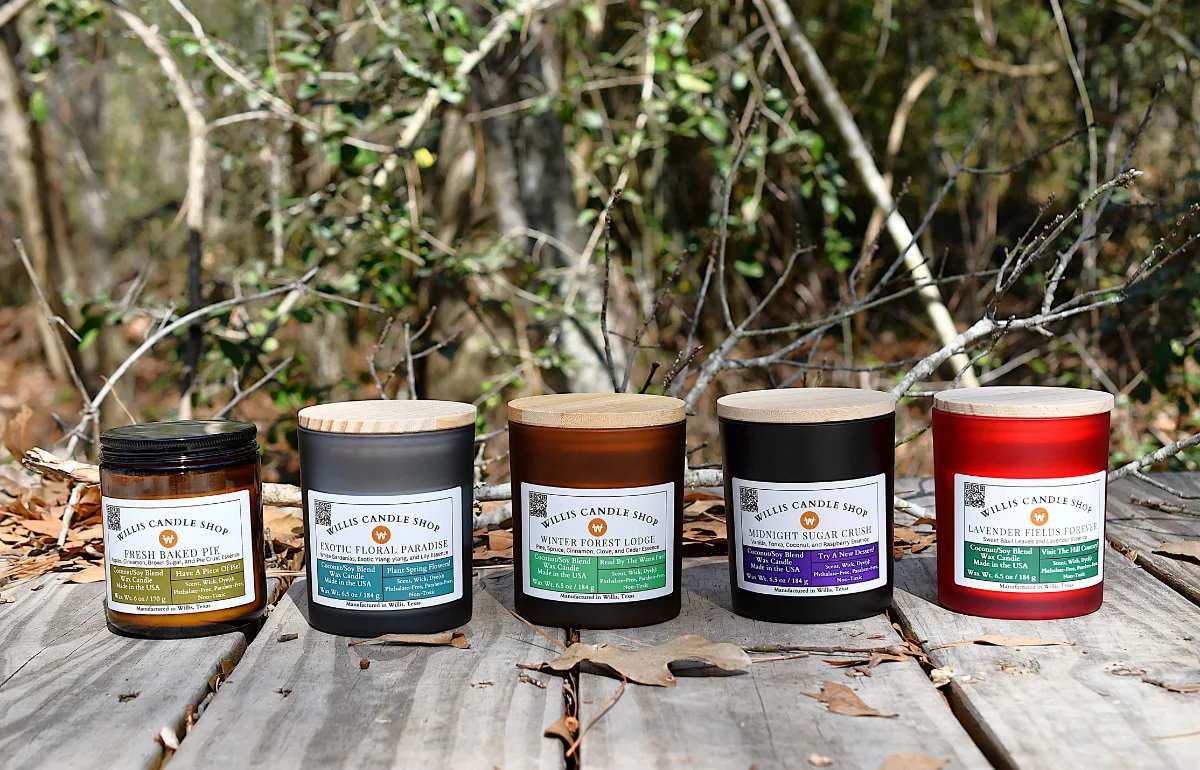
In the pursuit of the modern, well-curated home, we have become sophisticated in our discernment. We analyze the provenance of our textiles, the sustainability of our furniture, and the chemical composition of our skincare. Yet, there remains a significant blind spot: the home fragrance industry. We treat lighting a candle as a benign aesthetic ritual, oblivious to the fact that it is a complex chemical event that alters our indoor air.
The home fragrance industry is undergoing a necessary evolution. We see a distinct divide: industrial giants relying on antiquated petroleum models, natural-at-all-costs artisans who overlook the thermodynamics of combustion, and an emerging class of engineering-led studios that prioritize material science. In this landscape, the Willis Candle Shop serves as a vital benchmark, offering a blueprint for transparency in an environment defined by proprietary mystery. By examining these tiers through an investigative lens, we see that ingredient-level transparency is the only logical path for a sector claiming to prioritize wellness. If we are to embrace intentional wellness, we must move beyond the “natural versus synthetic” binary and prioritize the engineering standard: the behavior of materials under heat.
The Economic Mechanics of Paraffin: Cost vs. Performance
To understand home fragrance, one must confront the dominant model: the paraffin-based commodity market. For decades, the industry has relied on paraffin wax as the undisputed standard. From a manufacturing standpoint, this is a masterclass in efficiency. Paraffin, a crude oil byproduct, is a viscous residue that, when bleached and chemically treated, becomes a consistent, low-cost slab of wax. It is the default for the global industry because it is cheap, stable, and holds large amounts of artificial fragrance.
However, the economics of paraffin rarely stop at the wax. To achieve the specific aesthetic results the modern consumer expects—a flawless finish and an aggressive scent throw—manufacturers rely on a cocktail of additives. Chemical polymers like Vybar, stearic acid, and microcrystalline wax are essential. These are not merely decorative; they are performance enhancers engineered to solve the structural flaws of a petroleum byproduct. We are essentially paying for a “shelf-life aesthetic” that serves global retail logistics—keeping the product stable in hot warehouses—rather than our health.
From a critical perspective, this model prioritizes volume over respiratory health. We are introducing derivatives of the crude oil barrel into the air we breathe in our living rooms. In any other industry, the call for transparency would have triggered a pivot toward safer alternatives; in the candle market, the obfuscation continues, shielded by the lack of mandatory ingredient disclosure. It is a model that relies on consumer inertia, betting that visual perfection will outweigh the hidden reality of its combustion profile.
The “Natural” Myth: Why Organic Labels Fail Under Combustion
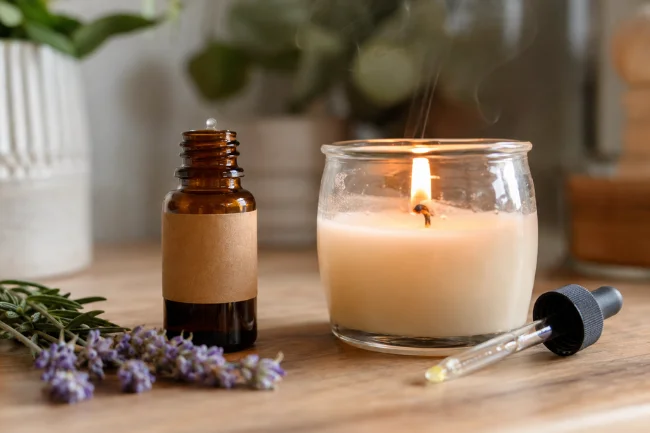
The second tier of the industry is centered around the organic essential oil movement. This segment operates on a flawed narrative: if a substance is natural, it is inherently the gold standard. It is an emotional pitch that resonates with consumers seeking to move away from petroleum hazards. However, this tier often fails to account for the thermodynamics of combustion, creating a disconnect between marketing and physical reality.
The misunderstanding is rooted in the assumption that if an essential oil is safe for topical use—such as in a lotion—it is safe when burned. The chemistry of the skin is temperate; the chemistry of a candle flame is extreme. When an essential oil is subjected to the intense heat of a wick, which can reach 2,500 degrees Fahrenheit, it is no longer a therapeutic oil. It is a volatile organic compound undergoing rapid thermal degradation. Under these conditions, the oils break down into acrid compounds that are often far less “purifying” than the marketing suggests.
This is a failure of technical application. Much like a business strategy that fails to account for market reality, the “all-natural” candle narrative ignores the physical laws of the environment it operates in. Being natural does not mean being thermally stable. True safety requires understanding how chemicals behave when subjected to fire, not just how they behave in a bottle. The consumer is sold a dream of purity that is physically incompatible with the high-heat environment of a burning wick.
Engineering Integrity: The Case for Data-Driven Manufacturing
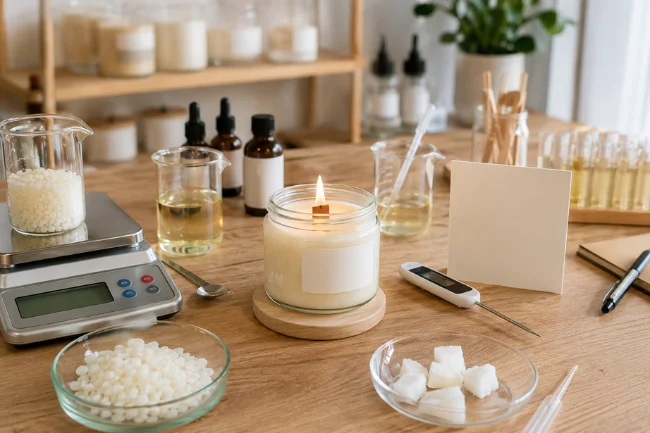
The third branch, the “good,” is where precision meets purpose. High-end, transparent studios operate with a commitment to material science that few others undertake. These studios approach the candle as a piece of functional home equipment requiring rigorous testing and R&D. By adopting a transparent approach, these studios avoid the traps of both the commodity paraffin market and the unstable “natural” market.
They operate on the understanding that fragrance oils, when engineered for combustion, can perform more cleanly than unstable natural alternatives. Think of it like modern synthetic motor oil—a byproduct processed to be superior to the original base oil. Their fragrance oils are engineered to be stable at high temperatures, ensuring the home environment remains a space of comfort rather than a chemical experiment.
For those interested in this intersection of design, safety, and sustainable manufacturing, looking toward the methodology of a wood wick candle collection provides an excellent case study. These products utilize natural wood wicks to create a laminar burn that avoids the soot production of paraffin candles, providing a stable thermal environment for the fragrance to evaporate cleanly. By managing the burn rate and heat distribution, these manufacturers ensure the fragrance is released as intended, without the breakdown of compounds.
This commitment to transparency acts as a “duty of care.” These studios understand their label does not just tell the consumer what is inside the candle; it also tells them what is not inside, which is the more important metric in an era of skepticism. They have removed the “proprietary blend” shield, replacing it with open disclosure, the mark of a manufacturer with nothing to hide.
The Future of Domestic Wellness: Curating a Clean Sanctuary
The final component of this olfactory architecture is the realization that indoor wellness is a continuous process of curation. In the same way a savvy investor looks beyond marketing, or a homeowner researches the long-term impact of their construction choices, we must apply the same due diligence to our environment. It is not enough to change air quality once; it is about establishing a ritual that prioritizes peace of mind daily.
By choosing products engineered for stability and long-term performance, we commit to a standard of excellence that reflects our values. The future belongs to brands built on honesty and technical rigor. We should view home fragrance not as décor, but as the foundation of the home’s invisible architecture—a testament to a standard of living that refuses to compromise on health or safety.
We are moving toward a future where consumer habits match our ethical values, creating a domestic landscape built for thriving rather than corporate convenience. As the market evolves, the distinction between those who hide behind “proprietary” labels and those who embrace radical transparency will become the defining line between the past and the future. The consumer now has the power to demand this shift, and by making intentional choices, they are voting for a cleaner, more honest marketplace. This is the ultimate act of consumer resistance, proving that we can demand the truth and cultivate a sanctuary that reflects our best values.

David Carter is a licensed contractor and certified home renovation specialist with over 12 years of experience in residential construction and design. He specializes in DIY projects, sustainable home upgrades, and interior remodeling. At wellhealthorganic1.com, he shares practical, safety-first home improvement tips for every skill level.