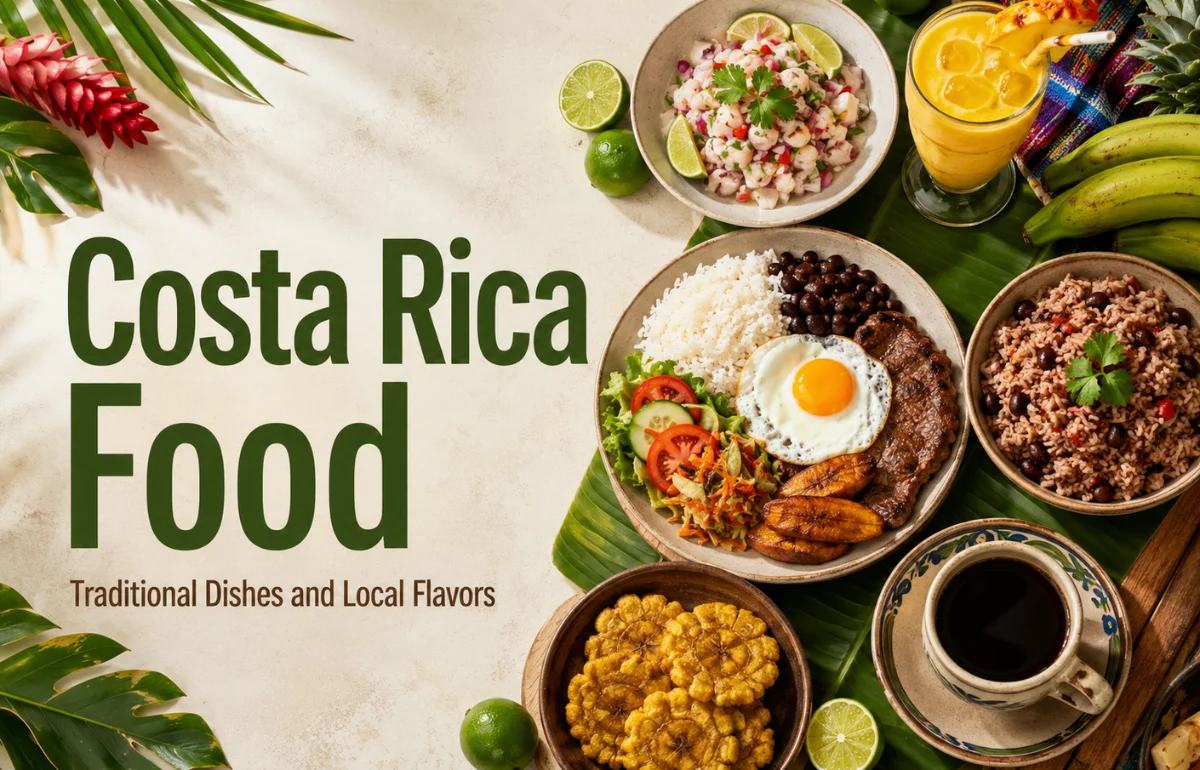
Costa Rica food is the traditional cuisine of Costa Rica, built around rice, beans, corn, plantains, fresh fruit, vegetables, seafood, chicken, beef, pork, herbs, and mild seasonings. It is not usually spicy like Mexican food, and it is not limited to one national dish. At its heart, Costa Rican cuisine is practical, filling, fresh, and balanced. A typical plate often brings together protein, carbohydrates, vegetables, and fruit in a simple way that works for everyday eating.
When I think about Costa Rican food, I think of comfort rather than complication. It is the kind of food that does not try too hard. A plate of gallo pinto at breakfast, a casado at lunch, or a bowl of olla de carne on a rainy day tells you more about local life than a fancy tasting menu ever could.
Costa Rican cuisine has been shaped by Indigenous traditions, Spanish influence, Afro-Caribbean cooking, farming culture, and the country’s tropical climate.
That mix explains why rice, beans, corn, tubers, coconut milk, fresh herbs, seafood, and tropical fruits appear so often. The food is usually mild, but it is not bland when it is done well. The flavor often comes from slow cooking, fresh produce, Salsa Lizano, garlic, onion, cilantro, peppers, citrus, and the natural richness of ingredients.
The biggest mistake people make is comparing Costa Rican cuisine directly with Mexican food. They share some ingredients, but the cooking style is different. Costa Rican dishes are usually less spicy, less sauce-heavy, and more focused on complete everyday meals.
What Costa Rican Food Tastes Like
Most traditional dishes taste earthy, fresh, lightly seasoned, and satisfying. Rice and beans create the base. Plantains add sweetness or crispness. Fresh cabbage salad brings crunch. Lime adds brightness. Meat or fish gives the plate weight.
The Caribbean coast is different. There, the food often has coconut milk, chile panameño, thyme, seafood, and Afro-Caribbean influence. A Caribbean rice and beans plate tastes richer, warmer, and more aromatic than the standard rice and beans you may find in the Central Valley.
Must-Try Traditional Costa Rican Dishes
Dish
What It Is
Best Time to Eat It
Why Try It
Gallo pinto
Rice and beans mixed with herbs, peppers, and often Salsa Lizano
Breakfast
The classic Costa Rican morning dish
Casado
Rice, beans, protein, salad, plantains, and sometimes picadillo
Lunch or dinner
The best full-meal introduction
Olla de carne
Beef and vegetable soup with roots and tubers
Lunch
Comforting, filling, and traditional
Tamales
Corn masa filled with meat or vegetables, wrapped in banana leaves
Holidays or breakfast
A festive dish with family roots
Chifrijo
Rice, beans, chicharrón, pico de gallo, and avocado
Snack or bar food
Crunchy, salty, and satisfying
Patacones
Twice-fried green plantains
Appetizer or side
Crisp and perfect with dips or seafood
Ceviche
Fish cured with citrus, onion, peppers, and cilantro
Lunch or snack
Fresh, light, and coastal
Arroz con pollo
Seasoned rice with chicken and vegetables
Lunch
Familiar, filling, and widely available
Gallo Pinto: The Breakfast That Defines the Country
Gallo pinto is usually the first dish travelers hear about. It is made with rice and beans, often cooked with onion, sweet pepper, cilantro, and Salsa Lizano.
You will usually see it served with eggs, fried plantains, tortillas, cheese, sour cream, fruit, or coffee. I like it because it proves how simple ingredients can feel complete when they are cooked with care.
For a healthier plate, I would choose gallo pinto with eggs, fruit, and a small portion of cheese instead of loading it with sausage and extra fried sides.
Casado: The Best First Meal to Order
If you only order one traditional meal, make it a casado.
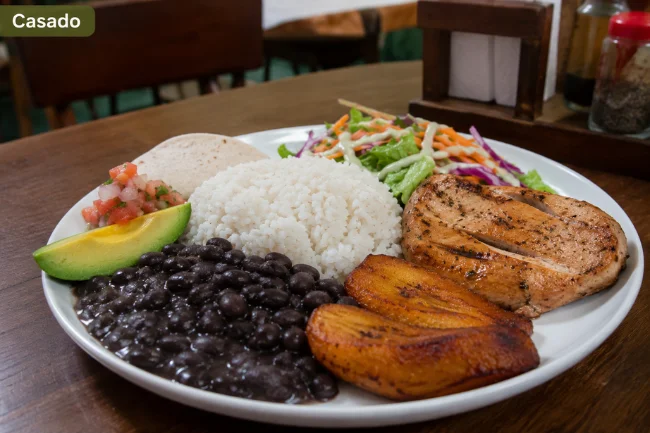
A casado is not one single recipe. It is a plate built from several parts: rice, beans, a protein, salad, plantains, and sometimes picadillo, tortillas, avocado, or a small pasta salad.
The protein can be chicken, beef, pork, fish, or a vegetarian option. In a local soda, which is a small casual restaurant, casado is usually one of the safest and most reliable orders.
What makes casado useful is balance. You get carbohydrates, protein, fiber, vegetables, and fat on one plate. That is why it works well for travelers who want something filling without guessing through an unfamiliar menu.
Olla de Carne: Costa Rica’s Comfort Soup
Olla de carne is a traditional beef and vegetable soup. It often includes cassava, plantain, corn, potato, carrot, chayote, and other local vegetables.
This is not a light starter soup. It is a full meal. The broth is warm and savory, while the root vegetables make it hearty.
I would order this when I wanted something simple, nourishing, and less fried. It is also one of the best dishes for understanding Costa Rica’s farming roots because it uses ingredients that have long been part of home cooking.
Tamales: A Dish With Family Meaning
Costa Rican tamales are usually made with corn masa, filled with meat, rice, vegetables, or chickpeas, then wrapped in banana leaves and steamed.
They are especially common around Christmas, but you can find them at other times too. Compared with some other Latin American tamales, Costa Rican tamales often feel softer and more meal-like because of the filling combination.
This is not just food. It is a family activity in many homes. That cultural meaning is why tamales deserve a place in any serious article about Costa Rican cuisine.
Patacones and Plantains
Plantains are everywhere in Costa Rican cooking. Patacones are made from green plantains that are sliced, fried, flattened, and fried again.
They are crispy, salty, and usually served with refried beans, guacamole, chimichurri-style tomato salsa, or seafood.
Sweet ripe plantains are different. They are softer, sweeter, and often served as a side with casado. That contrast matters: green plantains are savory and crisp, while ripe plantains are sweet and tender.
Caribbean Costa Rican Food
The Caribbean side of Costa Rica deserves more attention than most food guides give it.
In areas such as Limón and Puerto Viejo, you will find dishes with coconut milk, seafood, chile panameño, thyme, and Afro-Caribbean influence. Rice and beans on the Caribbean coast is often cooked with coconut milk, which gives it a richer flavor than standard gallo pinto.
Popular Caribbean-style foods include whole fish with patacones, rondón, Caribbean chicken, seafood stews, and coconut-based rice and beans.
Region
Food Style
Dishes to Look For
Central Valley
Everyday traditional meals, sodas, home-style plates
Casado, gallo pinto, olla de carne
Caribbean Coast
Coconut, seafood, spice, Afro-Caribbean influence
Rice and beans, rondón, whole fish, patacones
Pacific Coast
Fresh seafood, ceviche, grilled fish
Ceviche, seafood rice, fried fish
Guanacaste
Corn-based and rural traditions
Tortillas, chorreadas, tamales, cheeses
San José
Wider restaurant variety and modern Costa Rican cooking
Traditional sodas, market food, updated local cuisine
Ceviche, Seafood, and Coastal Eating
Costa Rica has coastlines on both the Pacific and Caribbean sides, so seafood naturally plays a role.
Ceviche is one of the easiest seafood dishes to try. It is usually made with fish cured in lime juice, mixed with onion, cilantro, sweet pepper, and sometimes served with crackers or chips.
Grilled fish, fried whole fish, shrimp rice, and seafood soups are also common in coastal towns. When I look at seafood in a hot climate, I care about freshness more than creativity. Busy local places are usually a better sign than empty restaurants with huge menus.
Sweet Foods and Desserts
Costa Rican desserts are comforting and familiar. They are not always flashy, but they hit the right note after a simple meal.
Arroz con leche is rice pudding made with milk, cinnamon, sugar, and sometimes condensed milk. Tres leches cake is also popular, especially for people who like soft, milky desserts.
You may also find cajetas, coconut sweets, churchills, fruit-based desserts, and sweet breads, depending on the region.
Drinks to Try in Costa Rica
Fresh drinks are one of the easiest ways to enjoy Costa Rican flavors.
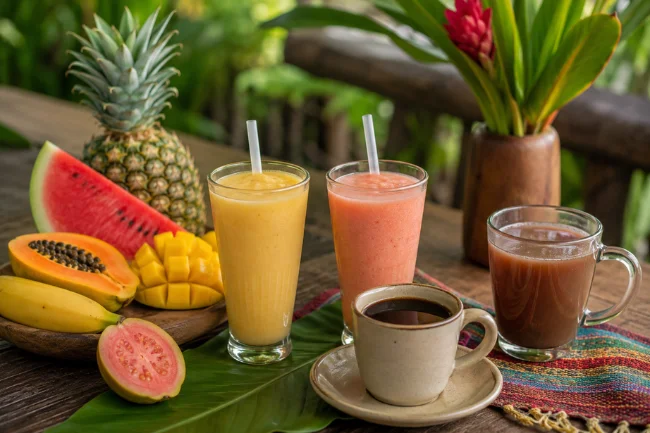
Batidos, also called refrescos or naturales, are fruit drinks made with water or milk. Common flavors include mango, pineapple, passion fruit, papaya, banana, watermelon, and guava.
Coffee is another major part of Costa Rican food culture. A simple cup of local coffee with breakfast can be just as memorable as the meal itself.
Agua dulce, made from sugarcane-derived tapa de dulce, is another traditional drink. It can be served hot or cold and gives you a taste of rural Costa Rican sweetness.
How to Eat Healthier in Costa Rica
Costa Rican food can be very balanced if you order wisely. The problem is not the cuisine itself. The problem is usually portion size, fried sides, sugary drinks, and eating every meal like a vacation meal.
If I wanted a lighter but still traditional plate, I would order grilled fish or chicken, rice and beans, salad, fruit, and a small portion of plantains.
Goal
Better Choice
Limit
More protein
Grilled fish, chicken, eggs, beans
Extra fried meats
More fiber
Beans, vegetables, fruit, picadillo
White bread-heavy sides
Less sugar
Water-based batido without added sugar
Sweetened drinks and desserts daily
Less fried food
Olla de carne, grilled fish, casado with salad
Fried snacks at every meal
Better balance
Casado with vegetables and lean protein
Oversized rice portions with few vegetables
If you are managing weight, blood sugar, digestion, or long-term wellness goals, food choices matter even while traveling. Well Health Organic also offers professional health services for readers who want more personalized support beyond general food guidance.
What to Order at a Local Soda
A soda is one of the best places to try traditional Costa Rican food. These small local restaurants usually serve simple, affordable meals.
Good first orders include casado with chicken or fish, gallo pinto with eggs, arroz con pollo, olla de carne, or a natural fruit drink.
Here is the practical rule I would use: if the menu is short, the place is busy, and locals are eating there, you are probably in the right place.
Ask what’s fresh that day. Many sodas have daily specials that are better than the printed menu.
Is Costa Rican Food Vegetarian-Friendly?
Costa Rican food can be vegetarian-friendly, but you need to ask clearly. Rice, beans, plantains, tortillas, salad, vegetables, fruit, eggs, cheese, and picadillos are common.
However, beans may sometimes be cooked with animal fat or meat stock, and soups may have meat-based broth. If you are strict vegetarian or vegan, ask before ordering.
A vegetarian casado can work well when it includes rice, beans, salad, plantains, avocado, tortillas, cheese or eggs, and vegetables.
Common Ingredients in Costa Rican Cuisine
The ingredients tell you a lot about the country’s food identity.
Rice and beans form the base. Corn appears in tortillas, tamales, chorreadas, and other traditional foods. Plantains show up fried, sweet, or mashed. Tropical fruits are used in drinks, breakfast plates, and snacks.
Fresh herbs like cilantro, simple vegetables like cabbage and tomato, and condiments like Salsa Lizano help tie everything together.
Costa Rican cuisine is not about heavy spice. It is about familiar ingredients used consistently across breakfast, lunch, and dinner.
Food Mistakes Tourists Should Avoid
The first mistake is eating only at international restaurants. You can do that anywhere. Try sodas, markets, coastal seafood places, and small bakeries.
The second mistake is assuming mild means boring. Many dishes are subtle, but that does not mean they lack identity.
The third mistake is ordering the same dish every day. Gallo pinto and casado are essential, but Costa Rica also has soups, seafood, corn dishes, Caribbean stews, desserts, and fruit drinks worth trying.
The fourth mistake is ignoring regional food. A Caribbean rice and beans plate is not the same experience as a Central Valley casado.
Best Costa Rican Foods for First-Time Visitors
If this is your first time, start with gallo pinto for breakfast, casado for lunch, patacones as a snack, ceviche near the coast, and arroz con leche or tres leches for dessert.
Then go deeper. Try olla de carne, chifrijo, Caribbean rice and beans, tamales, fresh batidos, and local fruit.
That path gives you the basics first, then shows you the wider range of Costa Rican cooking.
Final Thoughts
Costa Rican food is simple, generous, and more varied than many travelers expect. The best way to understand it is not by chasing one famous dish, but by eating across different settings: a soda, a market, a coastal seafood spot, a bakery, and a Caribbean restaurant.
Start with gallo pinto and casado, but do not stop there. Try the soups, plantains, fruit drinks, seafood, desserts, and regional dishes that show the country’s real flavor.
FAQs About Costa Rica Food
What is the national food of Costa Rica?
Gallo pinto is widely known as Costa Rica’s national dish, especially for breakfast, while casado is the most classic everyday lunch plate.
Is Costa Rican food spicy?
Costa Rican food is usually mild. Some Caribbean dishes use hotter peppers, but most traditional meals are not heavily spicy.
What do Costa Ricans eat for breakfast?
A common breakfast is gallo pinto with eggs, tortillas, cheese, plantains, fruit, and coffee.
What is a soda in Costa Rica?
A soda is a small local restaurant that serves affordable traditional meals such as casado, gallo pinto, soups, and rice dishes.
Is Costa Rican food healthy?
It can be healthy when you choose balanced plates with beans, lean protein, vegetables, fruit, and moderate portions of fried foods or sugary drinks.
Dr. Emily Harper, PhD, RD, is a registered dietitian and nutritional scientist with over a decade of clinical research experience. She writes for Well Health Organic, specializing in metabolic health, whole-food dietary strategies, and evidence-based behavior modification. Dr. Harper translates complex physiological science into practical, sustainable meal patterns that help readers fuel their daily energy levels and break free from restrictive dieting cycles.