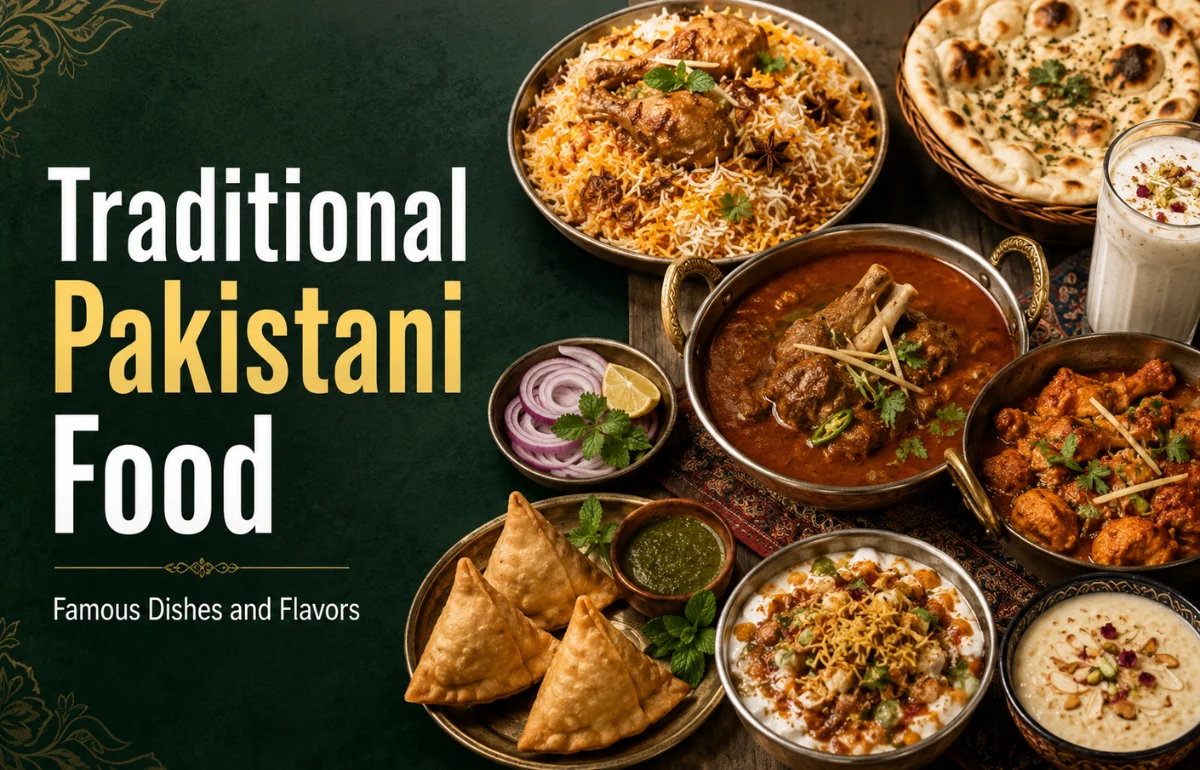
Traditional Pakistani food is the collection of everyday meals, festive dishes, street foods, breads, rice dishes, sweets, and drinks that come from Pakistan’s regional cooking traditions. It is known for slow-cooked meat, lentils, fragrant rice, hand-rolled breads, yogurt-based sides, fresh herbs, and bold spices such as cumin, coriander, black pepper, red chili, turmeric, cardamom, and garam masala.
What makes Pakistani cuisine special is not only heat or spice. It is the balance of comfort, hospitality, family-style serving, and regional identity. A single meal can include roti, salan, rice, raita, pickle, salad, and chai afterward. I grew up seeing Pakistani food treated less like “just dinner” and more like a reason to sit together, talk longer, and feed guests properly.
Why Traditional Pakistani Food Has Such Deep Flavor
The biggest secret behind Pakistani food is layering.
Most dishes do not start with everything thrown into one pot. Onions are browned first. Garlic and ginger are cooked until their raw smell disappears. Whole spices may be added early, while powdered spices are fried briefly in oil to release aroma.
Then comes meat, lentils, vegetables, or rice.
This method gives Pakistani dishes their deep, rounded flavor. Even a simple daal can taste rich if the tarka is done properly with ghee, cumin, garlic, and dried red chili.
Another important point is that Pakistani food is not one single style. Punjab, Sindh, Khyber Pakhtunkhwa, Balochistan, Gilgit-Baltistan, and Kashmir all bring different tastes to the table. Punjab leans hearty and buttery. Sindh often brings sharper spice. KPK is known for meat-heavy dishes with simpler seasoning. Balochistan has smoky and rustic flavors. Northern areas use more dairy, grains, dried fruits, and warming foods.
Traditional Pakistani Food at a Glance
Most Famous Traditional Pakistani Food You Should Know
Biryani
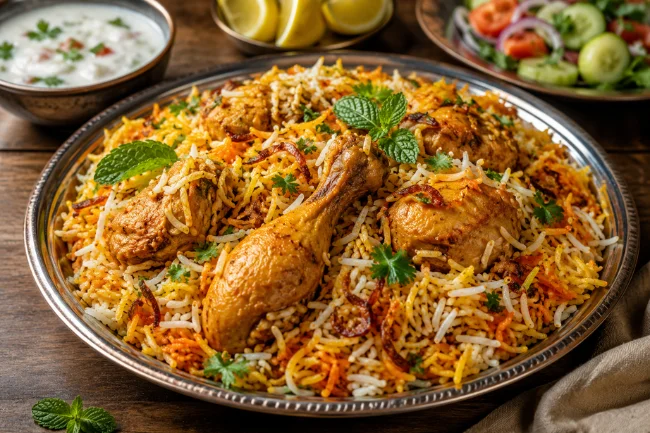
Biryani is one of Pakistan’s most loved rice dishes, especially in Karachi and Hyderabad-style cooking. It is made with basmati rice, meat, spices, yogurt, tomatoes, fried onions, mint, coriander, and sometimes potatoes.
A good biryani should never taste flat. The rice should be separate, the meat should be tender, and the masala should be powerful enough to perfume the whole plate.
Karachi biryani is usually spicier and more colorful, while some other versions are milder and more aromatic.
Nihari
Nihari is a slow-cooked meat stew traditionally eaten for breakfast, though many people now enjoy it at any time of day. It is usually made with beef or mutton and cooked until the meat becomes soft and the gravy turns thick and silky.
The dish is served with naan, ginger slices, green chilies, lemon, and fresh coriander.
When I think of heavy weekend breakfasts in Pakistan, nihari is one of the first dishes that comes to mind. It is not light food, and that is exactly the point. It is rich, filling, and deeply comforting.
Chicken Karahi
Chicken karahi is cooked in a wok-like pan called a karahi. It usually includes chicken, tomatoes, green chilies, ginger, garlic, black pepper, and fresh coriander.
Unlike many curries, a traditional karahi does not need a heavy onion base. The tomato and spice mixture becomes the sauce.
The best karahi has a glossy masala that clings to the chicken instead of swimming around it like soup.
Haleem
Haleem is a thick, slow-cooked dish made from wheat, barley, lentils, and meat. Everything is cooked until it becomes smooth and rich. It is topped with fried onions, lemon, fresh herbs, ginger, and sometimes green chilies.
Haleem is especially popular during Ramadan and Muharram, but it is also eaten throughout the year.
This dish is a perfect example of Pakistani food that feels both nourishing and festive. It is filling, high in protein, and made for sharing.
Pulao
Pulao is another classic rice dish, but it is different from biryani. Biryani is layered and often more heavily spiced. Pulao is cooked in stock, usually called yakhni, which gives the rice a warm and savory flavor.
Beef pulao, mutton pulao, chicken pulao, and Kabuli-style pulao are all popular.
A well-made pulao is subtle, fragrant, and comforting. It proves Pakistani food is not always about heavy chili.
Pakistani Breakfast Foods
Breakfast in Pakistan can be light, but traditional breakfasts are often rich and satisfying.
Halwa Puri
Halwa puri is a famous weekend breakfast. It includes deep-fried puris served with sweet semolina halwa, spicy chickpeas, and sometimes potato curry.
The contrast is what makes it special. You get crispy bread, sweet halwa, spicy chana, and soft potatoes on one plate.
It is not an everyday health food, but as a cultural breakfast, it is iconic.
Paratha
Paratha is a layered flatbread cooked with oil or ghee. It can be plain or stuffed with potato, minced meat, cauliflower, radish, or paneer.
Many Pakistani homes serve paratha with chai, yogurt, pickle, or fried egg.
For a healthier routine, I prefer plain roti during the week and keep paratha as an occasional breakfast. That simple choice keeps the cultural food experience alive without turning every meal into a heavy one.
Paya
Paya is made from slow-cooked trotters, usually goat, lamb, or cow. The gravy is gelatinous, rich, and deeply flavored.
It is a traditional breakfast dish in many families, especially during cold weather or special gatherings.
Popular Pakistani Street Foods
Pakistani street food deserves its own attention because it is fast, loud, colorful, and full of personality.
Samosa and Pakora
Samosas are triangular pastries filled with potato, meat, lentils, or vegetables. Pakoras are fritters made with gram flour and ingredients like onion, potato, spinach, or green chili.
Both are especially popular during Ramadan and rainy weather.
They are usually served with tamarind chutney, mint chutney, or ketchup.
Chaat
Chaat is a tangy, spicy snack made with chickpeas, potatoes, yogurt, chutneys, spices, and crispy toppings.
There are many versions, including dahi bhalla, papri chaat, fruit chaat, and chana chaat.
Chaat is one of the best examples of Pakistani flavor balance: sweet, sour, spicy, creamy, and crunchy in one bowl.
Bun Kebab
Bun kebab is a famous Pakistani street burger, especially associated with Karachi. It usually includes a lentil or meat patty, egg, chutney, onion, and a soft bun toasted on a griddle.
It is simple, affordable, and full of flavor.
Regional Pakistani Food Differences
Pakistani cuisine becomes more interesting when you stop treating it as one flavor and start looking at regions.
Chapli Kabab
Chapli kabab comes from the Pashtun food tradition and is especially famous in Peshawar. It is a flat minced meat kabab made with spices, tomatoes, onions, coriander, and sometimes pomegranate seeds.
The outside should be slightly crisp, while the inside stays juicy.
Sajji
Sajji is strongly associated with Balochistan. It is usually made with whole lamb or chicken, marinated simply, and roasted until tender.
Unlike heavily spiced curries, sajji often relies on salt, smoke, and slow cooking.
Saag and Makki Roti
Saag is a leafy green dish commonly made with mustard greens and cooked slowly until earthy and rich. It is often served with makki roti, a cornmeal flatbread.
This is classic Punjabi winter food.
Pakistani Breads: The Real Backbone of the Meal
Bread is not a side item in Pakistan. It is often the tool used to eat the meal.
Roti is the daily staple in many homes. Naan feels more restaurant-style or special. Paratha is heavier and usually eaten for breakfast or with kebabs.
This is one area where many online food articles miss the practical truth: in Pakistani homes, the bread often decides the meal experience. The same chicken curry feels different with roti, naan, rice, or paratha.
Vegetarian Traditional Pakistani Food
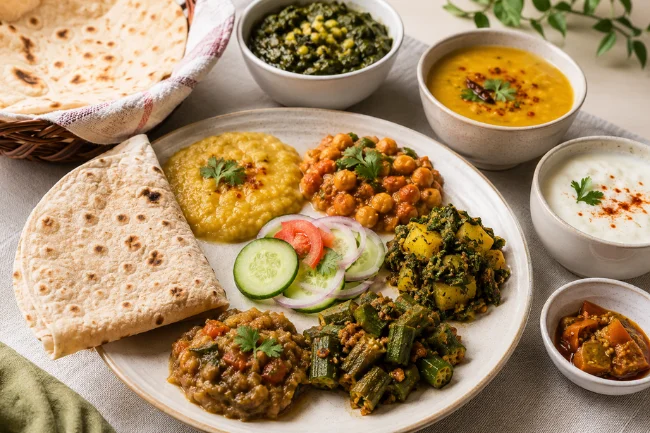
Pakistani food is often described as meat-heavy, but home cooking includes many vegetarian dishes.
Daal is one of the most common. Masoor daal, moong daal, chana daal, and mash daal all have different textures and flavors.
Chana masala, aloo palak, bhindi, baingan bharta, mixed sabzi, and saag are also widely eaten.
For health-conscious readers, this is where traditional Pakistani food can become very balanced. A plate with daal, roti, salad, yogurt, and a small serving of pickle gives fiber, protein, probiotics, and flavor without feeling boring. Readers who want to understand food, wellness, and better lifestyle choices can also explore Well Health Organic’s online health courses for deeper learning.
Pakistani Sweets and Drinks
Kheer
Kheer is a rice pudding made with milk, rice, sugar, cardamom, and sometimes nuts. It is served at weddings, Eid, family gatherings, and religious occasions.
Gulab Jamun and Jalebi
Gulab jamun is soft, syrup-soaked, and rich. Jalebi is crispy, spiral-shaped, and soaked in sugar syrup.
Both are very sweet, so they are usually enjoyed in small portions.
Lassi
Lassi is a yogurt-based drink that can be sweet or salty. Sweet lassi is thick, cooling, and popular in Punjab. Salty lassi is lighter and often taken with meals.
Chai
Chai is more than a drink in Pakistan. It is a daily habit, a guest-welcoming gesture, and a social pause.
Milk tea with black tea leaves, sugar, and sometimes cardamom is common in homes, offices, roadside stalls, and restaurants.
Is Pakistani Food Healthy?
Pakistani food can be healthy or unhealthy depending on how it is cooked and how often heavy dishes are eaten.
Home-style Pakistani meals can be balanced when they include lentils, vegetables, yogurt, whole wheat roti, grilled meat, salad, and moderate oil.
The problem usually starts with oversized portions, too much ghee, deep-fried snacks every day, sugary drinks, and restaurant foods cooked with excess oil.
A smart Pakistani plate can look like this:
You do not need to abandon cultural food to eat better. You need better portions, smarter cooking, and more vegetables beside the dishes you already love.
What Makes Pakistani Food Different from Indian Food?
Pakistani and Indian foods share history, spices, and cooking methods, especially in border regions. But Pakistani cuisine often leans more toward meat dishes, wheat breads, rice, kebabs, slow-cooked stews, and regional Muslim food traditions.
Indian cuisine has a broader vegetarian identity in many regions, while Pakistani cuisine is strongly shaped by dishes like nihari, haleem, karahi, pulao, biryani, chapli kabab, sajji, and BBQ.
That said, the overlap is real. Food does not follow modern borders perfectly. Punjab, Sindh, Kashmir, and other regions have shared culinary memories that existed long before today’s national boundaries.
Best Pakistani Foods for First-Time Visitors
If someone asked me what to try first, I would not hand them a list of 50 dishes. I would start with a balanced experience:
Try biryani for rice, nihari for slow-cooked meat, chicken karahi for restaurant flavor, chapli kabab for regional BBQ, halwa puri for breakfast, daal for home-style comfort, chaat for street food, naan for bread, kheer for dessert, and lassi or chai for drinks.
That selection gives a real taste of Pakistani food without overwhelming the reader.
FAQs About Traditional Pakistani Food
What is the most famous food in Pakistan?
Biryani is one of the most famous foods in Pakistan, especially in Karachi, while nihari, karahi, and chapli kabab are also widely loved.
Is Pakistani food very spicy?
Some Pakistani dishes are spicy, but not all. Pulao, daal, korma, lassi, and many home-style dishes can be mild and aromatic.
What is a traditional Pakistani breakfast?
Common traditional breakfasts include halwa puri, paratha with chai, nihari, paya, chana, and eggs with roti.
What Pakistani food is good for vegetarians?
Daal, chana masala, saag, aloo palak, bhindi, baingan bharta, chaat, and vegetable pulao are good vegetarian options.
What is the difference between biryani and pulao?
Biryani is usually layered with spicy masala, while pulao is cooked in seasoned stock and has a milder, more fragrant flavor.
Final Thoughts
Traditional Pakistani food is rich, regional, emotional, and deeply connected to family life. It is not just spicy meat or restaurant curry. It includes rice, bread, lentils, vegetables, street snacks, breakfast dishes, sweets, tea, and slow-cooked meals that tell the story of different parts of Pakistan.
If you are exploring Pakistani cuisine for the first time, start with the classics, but do not stop there. Try one rice dish, one bread-based meal, one street snack, one vegetarian dish, one dessert, and one regional specialty. That is how you begin to understand the real flavor of Pakistan.

Dr. Emily Harper, PhD, RD, is a registered dietitian and nutritional scientist with over a decade of clinical research experience. She writes for Well Health Organic, specializing in metabolic health, whole-food dietary strategies, and evidence-based behavior modification. Dr. Harper translates complex physiological science into practical, sustainable meal patterns that help readers fuel their daily energy levels and break free from restrictive dieting cycles.